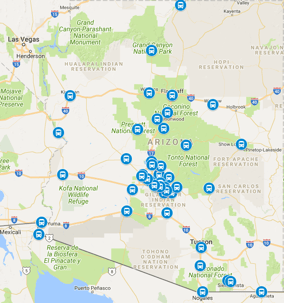
Driving Directions to Phoenix Sky Harbor Airport (PHX)
Phoenix Sky Harbor International Airport (PHX) sits just minutes from downtown Phoenix, making it a gateway for both business travelers and vacationers. Whether you’re coming from the quiet suburbs of the Northwest Valley, the growing communities of the West Valley, or the bustling East Valley cities of Chandler and Gilbert, knowing the exact highway sequence can save precious time. Below you’ll find step‑by‑step route summaries that rely on public information from the airport’s official website and local transportation sources.
From the Northwest Valley
If you’re traveling from cities such as Peoria, Glendale, or Surprise, the most direct route is to pick up Loop 202 (the Red Mountain Freeway) heading west and take exit 5 toward AZ‑143 S/Sky Harbor Airport. This short connector drops you onto AZ‑143, which merges into the airport’s perimeter road and leads directly to the terminals. Those who prefer an alternate path can take the 101 south to I‑10 East, then follow I‑10 until you see the exit for Sky Harbor at mile marker 149. Both routes funnel you onto East Sky Harbor Boulevard, where clearly marked signs guide you to the appropriate terminal.
From the West Valley
West Valley residents (including those from Laveen, Tolleson, or Avondale) will find I‑10 to be the backbone of their journey. Travel east on I‑10 until you reach the junction with East Sky Harbor Boulevard, then take exit 149 toward Sky Hbr/Arpt. The highway segment is roughly 15‑20 miles from the I‑10/I‑17 interchange, so traffic can vary by time of day. Early morning and late afternoon tend to see heavier volumes, especially around the I‑10 and US‑60 merge near downtown Phoenix.
From the East Valley (Chandler/Gilbert)
Drivers coming from Chandler, Gilbert, or the eastern suburbs should start on US‑60 W (the Superstition Freeway) and transition to I‑10 W. Once on I‑10, stay in the left lanes to prepare for exit 153A, which merges onto AZ‑143 N toward Sky Harbor. After traveling a short segment on AZ‑143, take exit 3B toward Airport/Sky Hbr and you’ll be on East Sky Harbor Boulevard within seconds. This route avoids the downtown core and usually offers a smoother ride during peak commuter hours.
Using Loop 202 from Central Phoenix
If you’re already in the heart of Phoenix (near the Phoenix Mountains or the cultural district), Loop 202 provides a quick westward run. Head west on Loop 202 until you reach exit 5, then follow the signs to AZ‑143 S/Sky Harbor Airport. This route is especially convenient for those staying near the Phoenix Art Museum or the Heard Museum, as it skirts the southern edge of downtown and connects seamlessly to the airport’s entry roads.
Understanding the Terminal Layout: Terminal 3 vs. Terminal 4
PHX operates only two terminals—Terminal 3 and Terminal 4—yet the airport feels expansive because each terminal houses multiple concourses and a wide variety of services. Understanding the distinct personality of each building helps you allocate time for security, gate changes, and dining.
Terminal 3 Highlights
Terminal 3 underwent a major renovation completed in recent years, delivering a modern feel with abundant natural light. It now serves as the hub for Delta Air Lines, Frontier Airlines, Hawaiian Airlines, and JetBlue. Travelers praised the terminal’s spacious lounges, local dining options, and artwork installations that reflect Arizona’s desert culture. The concourse layout is relatively compact: walking from one end of the terminal to the other takes less than five minutes, and moving walkways assist those carrying luggage.
Terminal 4 Highlights
Terminal 4 is the airport’s largest and busiest facility, handling the bulk of passenger traffic. It is home to American Airlines, Southwest Airlines, and British Airways, among others. The terminal’s four concourses are connected by wide corridors equipped with moving walkways, allowing passengers to traverse the entire building in under ten minutes. Terminal 4 also hosts the majority of the airport’s dining and retail venues, including the popular outdoor park area that offers seating, pet relief zones, and rotating artwork exhibits.
| Feature | Terminal 3 | Terminal 4 |
|---|---|---|
| Primary Airlines | Delta, Frontier, Hawaiian Airlines, JetBlue | American Airlines, Southwest, British Airways |
| Renovation Status | Recently renovated (modern amenities) | Original structure with continuous upgrades |
| Walking Time (end‑to‑end) | <5 minutes | <10 minutes (with moving walkways) |
| Dining Options | Local gems like Barrio Café, Mustache Pretzels | Matt’s Big Breakfast, Blanco Tacos, multiple fast‑casual spots |
| Shopping | Specialty retail, newsstands | Duty‑free, luxury brands, local souvenirs |
| Family Amenities | Nursing rooms near Gate C5 | Nursing rooms & family restrooms near Gate B12 |
| Outdoor Space | Limited | Outdoor park with seating, pet relief, artwork |
The Sky Train: Your Free Connector Across PHX
One of the most convenient features at Phoenix Sky Harbor is the free Sky Train. This automated people‑mover runs every 3‑5 minutes, linking Terminal 3, Terminal 4, the East Economy Parking lot, and the Valley Metro Rail station at 44th Street. The ride between terminals takes under five minutes, making it easy to switch flights or access ground transportation without stepping outside. Because the Sky Train operates around the clock, late‑night arrivals can still rely on it to reach rental car counters, bus stops, or the parking structures.
Fast‑Track Strategies: From Landing to Gate
Whether you’re touching down after a cross‑country flight or picking up a connecting flight, a few proven tactics can shave minutes off your transfer time.
1. Leverage the Sky Train Immediately
Upon deplaning, follow signs to the Sky Train platform. Even if you need to change terminals, the train’s frequency means you’ll rarely wait more than a few minutes. If you’re staying within the same terminal, the Sky Train can still be faster than walking through crowded concourses during peak times.
2. Use Moving Walkways in Terminal 4
Terminal 4’s four concourses are linked by wide corridors fitted with moving walkways. If you’re heading to a gate on the opposite side of the terminal, step onto the walkway, keep your bag on the left, and you’ll glide toward your gate without breaking a sweat.
3. Know Your Gate Location Before You Land
Most airlines publish gate assignments 24 hours in advance. Checking the airline’s app or the airport’s website while you’re still in the air lets you plan the fastest route. In Terminal 4, gates are grouped by concourse (A, B, C, D), and the moving walkways run parallel to each concourse, so you can prioritize the nearest walkway entrance.
4. Timing Matters at Security Checkpoints
Security lanes are busiest between 6 a.m. and