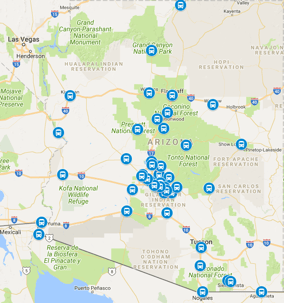
Driving Route Overview: Payson to Phoenix
The most direct path between Payson (ZIP 85541) and downtown Phoenix (ZIP 85003) stretches roughly 87 miles and follows a well‑marked corridor that blends scenic mountain driving with urban freeway travel. The journey begins on Arizona State Route 87, locally called the Beeline Highway, which winds north‑south through the Tonto National Forest and passes the historic town of Pine. After about 40 miles, the route merges onto Interstate 17 (I‑17) heading south, ultimately delivering travelers to the Phoenix metro area and Sky Harbor International Airport (PHX). Most mapping services, including MapQuest, report a normal travel time of approximately one hour and forty‑three minutes under typical traffic conditions. Because the highway is a primary corridor for both commuters and freight, drivers should anticipate periodic construction zones, especially during the spring and summer months when Arizona Department of Transportation often schedules maintenance along SR‑87.
Key Highway Segments and Landmarks
- SR‑87 (Beeline Highway) – Mile 0 to ~40: Starts at the Payson town center, runs past the Payson Regional Medical Center, and continues through the Coconino National Forest boundary near the Mogollon Rim overlook. Notable waypoints include the Payson Golf Course, the historic “Rim Trail” trailhead, and the small community of Pine.
- Transition onto I‑17 – Mile ~40: Drivers leave SR‑87 at the interchange just north of the town of Camp Verde, entering I‑17 southbound. The interstate passes by the town of Camp Verde and then the scenic “Mogollon Rim” vista points visible from the highway.
- I‑17 Southbound – Mile ~40 to ~80: The freeway skirts the western edge of the Verde Valley, offering views of the Mazatzal Mountains. Near the Phoenix metro area, the route passes the suburb of Anthem before entering the city of Phoenix.
- Final Approach to PHX – Mile ~80 to ~87: I‑17 ends at the junction with I‑10. Travelers continue east on I‑10 for a short segment, then exit toward Sky Harbor via the “Airport” exit (Exit 147). The airport’s terminals are clearly signed, and multiple cell‑phone waiting lots are available for pickup.
Typical Travel Times and Traffic Considerations
While the 87‑mile distance suggests a straightforward drive, real‑world conditions can add significant time. In normal traffic, the drive takes about one hour and forty‑three minutes, according to routing data from MapQuest. However, weekday rush hours—typically between 7:00 AM‑9:00 AM and 4:30 PM‑6:30 PM—can extend the trip by an additional 15 to 45 minutes, averaging around 30 minutes extra. Construction projects, especially along SR‑87 near the Mogollon Rim, may impose lane closures or reduced speeds on weekends and holiday travel periods. Travelers should also monitor weather conditions: snow or ice on the rim can require chain‑up restrictions, which can delay travel by an hour or more.
Shuttle vs. Driving vs. Bus: A Quick Comparison
Choosing the right transport mode depends on budget, schedule flexibility, and comfort preferences. Below is a side‑by‑side look at the most common options for the Payson‑to‑Phoenix corridor.
| Transport Mode | Typical Travel Time (Normal Traffic) | Schedule Flexibility | Cost Estimate | Key Advantages |
|---|---|---|---|---|
| Private Shuttle (door‑to‑door) | ~1 hr 31 min | 24/7, reservation‑based | Moderate – varies by provider | No driving fatigue, flight‑delay adjustments, door‑to‑door service |
| Personal Vehicle | ~1 hr 43 min | You set departure time | Fuel + tolls + parking at airport | Full control, ability to stop at scenic spots |
| Rideshare (e.g., Uber/Lyft) | ~1 hr 43 min (may vary) | On‑demand, surge pricing possible | Comparable to shuttle, subject to demand | Quick booking, cashless payment |
| Scheduled Bus / Public Transit | ~3 hours | Fixed timetable | Lower upfront cost | Economical, no need to drive |
What to Expect on the Road
Rest Stops and Fuel Stations Along SR‑87
SR‑87 is dotted with convenient stops that make the mountain leg comfortable. The first major rest area appears just south of Payson, near the intersection with Highway 260 (the Star Valley turnoff). Here you’ll find a clean restroom, vending machines, and a small picnic area. The next facility is located at the “Mogollon Rim Visitor Center” (milepost 251), where travelers can stretch, grab a snack, and get local travel information. Fuel stations are plentiful: the Payson Chevron (downtown), the Pine Country Store, and the Camp Verde Shell are all within a few miles of the highway. Most stations stay open 24 hours, but it’s wise to top off before heading into the more remote sections near the rim, especially during winter months when services may be limited.
Weather and Road Conditions in the Mogollon Rim Area
Because the route climbs from the desert floor (Phoenix elevation ~1,050 ft) to the Mogollon Rim (≈5,000 ft), temperature swings of 15‑20 °F are common, even in the same day. In summer, afternoon monsoons can bring sudden downpours, reducing visibility and creating slick roads. Winter snowstorms occasionally dust the rim, leading to temporary chain‑up requirements or road closures. The Arizona Department of Transportation (ADOT) provides real‑time road condition updates via the 511 system and the AZ511 website, which is a handy resource before departure.
Planning Your Airport Connection at Sky Harbor
Check‑in Deadlines and Buffer Times
Sky Harbor recommends that passengers arrive at the airport at least two hours before domestic departures and three hours before international flights. Boarding typically begins 30 minutes before the scheduled departure. If you’re traveling from Payson, the drive itself will take roughly 1 hr 30 minutes in normal traffic. Adding a two‑hour buffer for airport procedures means you should plan to leave Payson about three hours and thirty minutes before your flight’s scheduled departure. This schedule helps accommodate any unexpected delays on I‑17 or security lines.
Dealing with Flight Delays and Rush‑Hour Delays
Flight delays are unpredictable, but shuttle services often build in flexibility. Most shuttle providers, including Airport Shuttle of Phoenix, automatically adjust pickup times to 30 minutes after a domestic flight lands (or 45 minutes after an international arrival). If you’re driving yourself, keep an eye on traffic apps for real‑time congestion on I‑17. During heavy rush hours, adding an extra 30‑minute cushion is prudent. Using a navigation app that offers “alternate routes” can help you bypass accidents that may temporarily block lanes.
Frequently Asked Questions (FAQ)
How far is Payson from Phoenix?
The road distance is approximately 87 miles, as reported by multiple routing services including MapQuest and distance‑cities.com.
What is the fastest route from Payson to Phoenix?
The quickest driving route follows Arizona State Route 87 (Beeline Highway) south to the interchange with Interstate 17, then continues south on I‑17 into Phoenix and eventually to Sky Harbor via I‑10.
How long does the shuttle ride take?
Under normal traffic conditions, a private shuttle typically covers the 87‑mile stretch in about one hour and thirty‑one minutes. Rush‑hour traffic can add an additional 15‑45 minutes.
Is there a shuttle service that runs 24 hours a day?
Yes. Several shuttle providers operate around the clock, allowing you to schedule pickups for early‑morning flights or late‑night arrivals.
What should I do if my flight is delayed?
If you’ve booked a shuttle, the provider will usually monitor your flight and automatically adjust the pickup time—commonly 30 minutes after a domestic flight lands (or 45 minutes after an international landing). For self‑drivers, keep an eye on traffic apps to avoid unnecessary waiting.
Are there rest stops along the route?
Absolutely. SR‑87 features several well‑maintained rest areas and scenic overlooks near the Mogollon Rim, plus convenient fuel stations in Payson, Pine, and Camp Verde.
Can I use a promo code for a discount?
Some shuttle services offer promotional codes for first‑time online bookings. For example, entering the code “ONLINE” may yield a discount on one‑way trips. Always check the provider’s website for the latest offers.