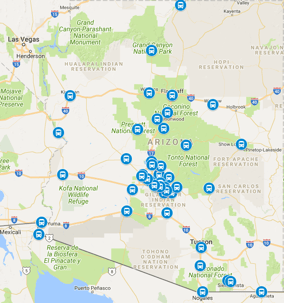
Arizona is renowned for its clear skies, making it one of the best spots in the world for stargazing. From the Sonoran Desert to the Grand Canyon, there are many spots where you can see the night sky in all its glory. With Arizona Shuttle, you can quickly get to these top stargazing destinations and enjoy the breathtaking views of the stars above.
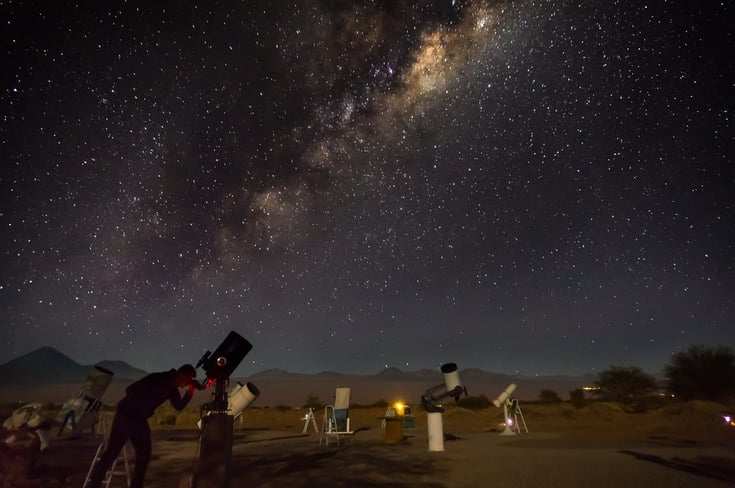
Grand Canyon National Park
As one of the world's most iconic natural wonders, the Grand Canyon is an excellent spot for stargazing. The park has been designated as an International Dark Sky Park, making it the best place in the country to observe the night sky. Arizona Shuttle offers daily tours to the Grand Canyon, including evening tours where you can experience the magic of stargazing. Phoenix to Grand Canyon shuttle transport to Grand Canyon transport to Grand Canyon
Sedona
Sedona is known for its stunning red rock formations and spiritual energy, but it's also an excellent spot for stargazing. The city is surrounded by the Coconino National Forest, which is home to some of the darkest skies in the state. Take an evening tour with Arizona Shuttle and explore the area's mystical energy and the cosmos. Sedona evening tours Sedona evening tours
Kitt Peak National Observatory
Kitt Peak is home to one of the world's largest arrays of optical and radio telescopes. Visitors can tour the observatory during the day and attend nightly observing programs. Arizona Shuttle offers private tours to the observatory, where you can learn about the stars and galaxies while observing them through the observatory's world-class telescopes.
Flagstaff Dark Skies Coalition
Flagstaff is one of the few cities with outdoor lighting ordinances designed to protect dark skies. As a result, the Flagstaff area is an ideal spot for stargazing. Arizona Shuttle offers tours to Flagstaff, where you can experience the stunning night sky and learn about the city's commitment to preserving dark skies. Flagstaff dark skies Flagstaff dark skies
Organ Pipe Cactus National Monument
Organ Pipe Cactus National Monument is one of the least-visited parks in Arizona. It's one of the best spots for stargazing. The park is surrounded by pristine desert wilderness, making it an excellent place to observe the night sky. Arizona Shuttle offers tours to the park, where you can explore its rugged beauty and take in the stars.
In conclusion, Arizona is a stargazer's paradise, and with Arizona Shuttle, you can easily visit the state's best stargazing spots. Whether you're a seasoned astronomer or a casual observer, you're sure to be awed by the breathtaking beauty of the night sky in Arizona.
Arizona Shuttle is a leading transportation company that offers a wide range of services, including airport transfers, private car services, and tours of the state's top destinations. The company has provided reliable and affordable transportation services to Arizonans and tourists for over 30 years. With flexible scheduling, personalized itineraries, and top-notch customer service, Arizona Shuttle is the go-to transportation company for travelers who want to explore Arizona's best.
Frequently Asked Questions
What time do the evening tours to the Grand Canyon start?
Evening tours to the Grand Canyon typically start in the late afternoon, allowing you to arrive just as it gets dark.
Can I bring my own telescope for the Kitt Peak National Observatory tour?
Yes, you can bring your own telescope; however, the observatory also provides telescopes for nighttime observing programs.
Is Sedona a good spot for stargazing even if I'm not interested in its red rock formations?
Absolutely! Sedona offers excellent stargazing opportunities due to the dark skies of the surrounding Coconino National Forest, regardless of your interest in the red rocks.
How does Flagstaff's commitment to preserving dark skies benefit visitors like me?
Flagstaff's outdoor lighting ordinances create ideal conditions for clear night sky views, enhancing the stargazing experience for visitors.
Arizona's Dark Sky Places: Why the State Leads the Country
Arizona isn't just good for stargazing — it's arguably the best state in America for it. The International Dark-Sky Association has certified 12 Dark Sky Places in Arizona, including 11 Dark Sky Parks and 1 Dark Sky Community. That's more certified dark sky territory than nearly anywhere else on Earth, and it's the direct result of decades of lighting ordinances, desert geography, and high-elevation clear air. From the Grand Canyon to small towns like Oracle and Flagstaff, these protected skies mean the Milky Way isn't a rare treat here — it's a regular feature of the night.
What Makes a Place Great for Stargazing?
Not every dark patch of desert delivers the same experience. The best stargazing spots share a few key traits:
- Distance from light pollution. Artificial light from cities washes out all but the brightest stars. The Petrified Forest National Park, for example, sits over 200 miles from Arizona's large cities, which is why its night skies feel so dramatic.
- Elevation. Higher ground puts you above more of the atmosphere's haze. Kitt Peak rises to nearly 7,000 feet in the Sonoran Desert, and Flagstaff's observatories sit at similar elevations for exactly this reason.
- Dry air. Arizona's low humidity means fewer clouds and sharper views — one reason so many major observatories were built here.
- Open horizons. Flat desert landscapes and wide valleys give you an unobstructed view of the full sky, horizon to horizon.
Comparison: Arizona's Best Stargazing Spots at a Glance
| Destination | Dark Sky Status | Known For |
|---|---|---|
| Grand Canyon National Park | Dark Sky Park (2016) | Milky Way over the canyon rim; open 24 hours a day |
| Sedona | Dark Sky Community (2014) | Milky Way visible above red rock formations |
| Kitt Peak National Observatory | Major research observatory site | Nightly public observing programs; ~7,000 ft elevation |
| Lowell Observatory, Flagstaff | Historic observatory (1894) | The 1896 Clark Refractor; public viewing telescopes |
| Chiricahua National Monument | Dark Sky Park (2021, IDA's 104th globally) | Volcanic rock spires under pristine skies |
| Oracle State Park | Dark Sky Park (2014) | 4,000-acre wildlife refuge near Tucson |
| Petrified Forest National Park | Dark Sky Park (2018) | Big horizons, 200+ miles from major cities |
| Walnut Canyon & Wupatki National Monuments | Dark Sky Parks (2016) | Ancestral Puebloan sites near Flagstaff |
Flagstaff: The World's First International Dark Sky City
Flagstaff deserves its own spotlight. In 2001, it became the world's very first International Dark Sky City, thanks to pioneering outdoor lighting ordinances that date back decades. The city sits at high elevation with famously clear air, and astronomy is woven into its identity. Lowell Observatory, one of the oldest observatories in the United States, is perched on a hill just outside town — it's home to the Clark Refractor, built in 1896 and famously used in early work that helped reveal the expanding nature of the universe. Visitors today can look through the observatory's 24-inch and 32-inch telescopes during public programs. Just southeast of town, Walnut Canyon National Monument (10 miles out, with the canyon floor 350 feet below the rim) and Wupatki National Monument both earned Dark Sky Park designations in 2016, making the Flagstaff area a complete dark-sky destination. Getting here is simple — check out our Phoenix to Flagstaff shuttle service.
More Hidden-Gem Stargazing Spots Across Arizona
Chiricahua National Monument
In southeastern Arizona, Chiricahua National Monument looks like another planet — a volcano erupted here 27 million years ago, leaving behind forests of tall, thin rock formations called hoodoos. In 2021, the International Dark-Sky Association designated it its 104th International Dark Sky Park worldwide, and the remoteness of the "Wonderland of Rocks" makes the night sky every bit as otherworldly as the landscape.
Oracle State Park
Just over 30 miles north of Tucson, the small town of Oracle anchors this 4,000-acre wildlife refuge. Designated an International Dark Sky Park in 2014, it's one of the most accessible dark sky spots for Tucson visitors — and being a working wildlife refuge, daytime visits come with the bonus of desert plants and animals.
Petrified Forest National Park
Designated in 2018, Petrified Forest offers a completely different side of Arizona: painted desert badlands, ancient petrified wood, and horizons so wide the sky feels enormous. Its distance from Phoenix and Tucson keeps light pollution minimal, and the park's openness means you can watch stars rise and set at the edges of the earth.
Estrella Mountain Regional Park
Don't want to leave the Phoenix area? The 20,000-acre Estrella Mountain Regional Park southwest of the city offers a genuine dark-sky experience without a long drive — proof that you don't always need to cross the state for a memorable night under the stars.
Flandrau Science Center, Tucson
For a guided experience, the Flandrau observatory at the University of Arizona features a 16-inch telescope and offers public viewing on Friday and Saturday evenings — a great option for families or anyone who wants expert help identifying what they're seeing.
When Can You See the Milky Way in Arizona?
The Milky Way's bright galactic core is best visible from late spring through early fall in Arizona, with summer offering the most dramatic views of the core high overhead. That said, winter brings its own rewards: crisper, steadier air, brighter stars, and constellations like Orion that aren't visible in summer. Plan around the new moon — when the moon is absent from the sky, faint objects like the Milky Way and nebulae are at their best. Checking a moon phase calendar before booking your Grand Canyon shuttle from Phoenix can make the difference between a good night and an unforgettable one.
What to Bring for a Night of Stargazing
Arizona nights get cold fast, even after hot desert days — especially at elevation. Pack smart:
- Layers. Temperatures at 7,000 feet can drop dramatically after sunset, even in summer.
- Red-light flashlight. Red light preserves your night vision; white light ruins it for 20+ minutes.
- A star chart or stargazing app. Free apps can help you identify constellations, planets, and the Milky Way's position.
- Binoculars. Even simple binoculars reveal star clusters, nebulae, and detail on the moon.
- Water and snacks. The desert is still the desert at night.
- Chairs or blankets. You'll be looking up for hours — comfort matters.
Frequently Asked Questions About Arizona Stargazing
Is Sedona a dark sky city?
Yes. Sedona was designated a Dark Sky Community by the International Dark-Sky Association in 2014, thanks to lighting controls and community commitment. That's a big reason the Milky Way is clearly visible above the red rocks on clear nights.
What is the darkest city in Arizona?
Flagstaff holds the distinction of being the world's first International Dark Sky City, certified in 2001. Its long-standing lighting ordinances keep the city's skies remarkably dark for an urban area of its size.
Can you see the Milky Way in Sedona?
Yes — on clear, moonless nights, the Milky Way is plainly visible from Sedona, especially from spots on the outskirts of town and in the surrounding Coconino National Forest. Summer months offer the best views of the galactic core.
How many Dark Sky Places does Arizona have?
Arizona has 12 officially designated Dark Sky Places recognized by the International Dark-Sky Association — 11 Dark Sky Parks and 1 Dark Sky Community — among the most of any state in the U.S.
When is the best time of year to go stargazing in Arizona?
Late spring through early fall is best for viewing the Milky Way's core, while winter offers the crispest, clearest air and bright winter constellations. Whenever you go, aim for a night near the new moon.
Do I need a telescope to enjoy stargazing in Arizona?
No. Under truly dark skies like those at the Grand Canyon, Chiricahua, or Petrified Forest, thousands of stars are visible to the naked eye. If you want telescope views, Kitt Peak and Lowell Observatory both offer public nighttime programs with powerful instruments.
How do I get to Arizona's stargazing spots without driving at night?
That's where we come in. Arizona Shuttle provides shuttle service across Arizona, including evening-friendly routes to the Grand Canyon, Sedona, and Flagstaff, so you can relax and enjoy the stars instead of navigating desert highways after dark.