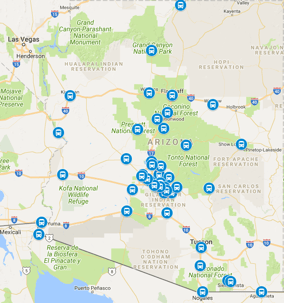
Arizona's stunning landscapes will leave visitors in awe, from the majestic Grand Canyon to the otherworldly Monument Valley. It is home to a few of the most iconic landscapes in the United States, and many of these natural wonders are easily accessible by the Arizona shuttle. In this blog post, we'll explore some of the most iconic landscapes in Arizona that you can experience by shuttle.
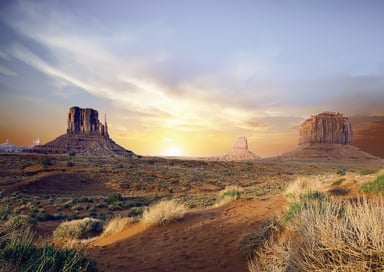
The Grand Canyon
Every trip to Arizona is complete with a visit to the Grand Canyon, one of the world's seven natural wonders. With its breathtaking views and rugged terrain, the Grand Canyon is a must-see destination for anyone visiting the state. Shuttle services offer daily trips to the South Rim of the Grand Canyon, where visitors can take in stunning views from lookout points like Mather Point, Yavapai Point, and Desert View. Phoenix to Grand Canyon shuttle Best Grand Canyon shuttle Best Grand Canyon shuttle For a more adventurous experience, visitors can also take a mule ride, hike down into the canyon, or raft down the Colorado River.
Monument Valley
Monument Valley is known for its towering sandstone buttes and stunning vistas in the Navajo Nation in northeastern Arizona. Monument Valley is one of the most recognizable landscapes in the American West, made famous by countless Western movies. Shuttle services offer daily tours of the valley, where visitors can explore the area's unique rock formations and learn about Navajo culture and history. Monument Valley exploration
Antelope Canyon
Located on Navajo land near Page, Arizona, Antelope Canyon is a narrow slot canyon known for its undulating sandstone walls and colorful rock formations. Antelope Canyon tours Antelope Canyon tours Visitors can walk through the narrow gorge, taking in the stunning colors and textures of the sandstone walls. Because of the unique lighting in the canyon, many visitors choose to visit during the midday hours when the sunlight filters down through the narrow opening above the canyon. Shuttle services offer daily tours of the canyon, divided into two sections: Upper Antelope Canyon and Lower Antelope Canyon.
Horseshoe Bend
Located just south of Page, Arizona, Horseshoe Bend is a stunning horseshoe-shaped bend in the Colorado River. Horseshoe Bend access Visitors can take in the spectacular views of the river and the surrounding red rock landscape. Shuttle services offer daily trips to the overlook, perched on a cliff 1,000 feet above the river.
Sedona Red Rocks
In central Arizona, Sedona is famous for its stunning red rock structures and vibrant arts community. Visitors can hike among the red rocks, explore the many art galleries and studios, and enjoy fascinating views of the surrounding landscape. Shuttle services offer daily trips to the area.
In conclusion, Arizona's iconic landscapes are indeed a sight to behold, and there's no better way to experience them than by the Arizona shuttle. Whether visiting the Grand Canyon, Monument Valley, or any other stunning landscape in the state, shuttle services make exploring and taking in the breathtaking scenery easy.
Frequently Asked Questions
What are the best lookout points for views of the Grand Canyon?
Mather Point, Yavapai Point, and Desert View offer stunning views.
Can I visit both Upper and Lower Antelope Canyon in one day?
Yes, shuttle services offer daily tours that cover both sections of Antelope Canyon.
How can I experience Monument Valley's Navajo culture?
Shuttle tours include stops where you can learn about Navajo history and traditions.
What makes Horseshoe Bend a unique spot to visit?
Horseshoe Bend offers spectacular views of the Colorado River from a 1,000-foot cliff overlooking a horseshoe-shaped bend.
Beyond the Big Five: More Iconic Landscapes Worth Building a Trip Around
The Grand Canyon, Sedona, and Monument Valley get the headlines, but travel writers at themoderndayadventurer.com and morethanjustparks.com count roughly 25 Arizona landmarks worth building an entire trip around. From a bridge that once spanned the Thames to a desert mission older than the state itself, here are the iconic landscapes and landmarks that round out an unforgettable Arizona itinerary — many of them reachable on shuttle routes radiating from Phoenix.
Lake Havasu City and the London Bridge
One of the most unusual landmarks in the entire country sits on the Colorado River in western Arizona. The London Bridge in Lake Havasu City is the actual 1830s bridge that once carried traffic across the Thames in London. When the City of London sold it in 1968, entrepreneur Robert McCulloch had it shipped stone by stone to Arizona and reassembled over a channel of the Colorado. Today the bridge anchors a lakeside playground where visitors walk across history, then head to the waterfront for dining and desert views. The drive from Phoenix follows US-60 and AZ-95 through some of the state's most rugged western terrain.
Lake Powell and Glen Canyon
In the state's far north, where the desert meets deep blue water, Lake Powell stretches across the Arizona–Utah border. According to travel coverage at themoderndayadventurer.com, the lake offers over 2,000 miles of shoreline — more than the entire West Coast of the continental United States — making it a destination for boating, fishing, and exploring hidden coves by kayak or houseboat. Page serves as the gateway town, which is exactly why shuttle travelers often pair a Lake Powell stop with nearby Antelope Canyon and Horseshoe Bend in a single northern Arizona loop.
The Sonoran Desert: Arizona's Signature Landscape
Ask a botanist to name Arizona's most iconic landscape and the answer may surprise you: it's the desert itself. The Sonoran Desert is the only place on Earth where the towering saguaro cactus grows in abundance, and its silhouettes define the horizon around Tucson, Phoenix, and Organ Pipe Cactus National Monument along the Mexican border. Saguaro National Park, flanking Tucson on the east and west, offers paved scenic drives and hiking trails where these giants — some more than a century old — stand in forests unlike anywhere else on the planet. Sunset is the magic hour, when the rock and cactus glow orange and the desert cools to life.
Wupatki National Monument
North of Flagstaff along US-89, Wupatki National Monument preserves remarkable ancestral Puebloan ruins set against the painted backdrop of the Painted Desert. The red-sandstone pueblos here were built by ancestral peoples roughly 900 years ago; the largest once contained more than 100 rooms. Established as a national monument in 1924, Wupatki remains deeply significant to the Hopi, Navajo, and other tribes who hold this land sacred. It pairs perfectly with the volcanic cinder cones of adjacent Sunset Crater Volcano National Monument on the same loop road, making it one of northern Arizona's most rewarding half-day drives.
Tombstone Historic District
Number 17 on The Modern Day Adventurer's landmark list — and arguably the most famous town in the Old West — Tombstone boomed as a silver-mining camp in the 1880s and earned eternal fame as the site of the Gunfight at the O.K. Corral, the 30-second shootout in 1881 involving Wyatt Earp and Doc Holliday. Today the Tombstone Historic District lets visitors walk the same wooden boardwalks, tour historic saloons and mines, and catch daily reenactments of the legendary gunfight. The town sits about 70 miles southeast of Tucson via AZ-80.
San Xavier del Bac Mission
Just south of Tucson off Interstate 19, the white domes of San Xavier del Bac Mission rise dramatically from the desert floor. Widely regarded as one of the finest examples of Spanish Colonial architecture in the United States, the current church was completed in 1797 and is still an active parish serving the Tohono O'odham community. Its ornately decorated interior, restored over recent decades, rewards visitors who take the time to step inside — and the drive itself passes through classic Sonoran Desert scenery.
Bisbee and the Copper Queen Mine
Tucked into the Mule Mountains near the Mexican border, the former copper boomtown of Bisbee charms visitors with its hillside Victorian architecture and artsy, offbeat character. The Copper Queen Mine closed in the 1970s, but you can still ride a mine train deep into the tunnels on a tour led by former miners — hard hat and headlamp included. Combine Bisbee with nearby Tombstone and the wine country of Sonoita along AZ-80 and AZ-82 for one of the best road-trip loops in southern Arizona.
Yuma Territorial Prison State Historic Park
At the far southwestern corner of the state, where Interstate 8 crosses the Colorado River, the Yuma Territorial Prison held convicts from 1876 to 1909 and earned a fearsome reputation in the desert heat — though it was surprisingly progressive for its day, with a library and electricity. Today it is an Arizona State Historic Park where you can walk the original cell blocks, see the grim dark cell, and learn the stories of the 3,000 men and women who served time here.
Quick Comparison: Which Arizona Landscape Should You Visit?
| Destination | Region of Arizona | Best For | Main Highway Access |
|---|---|---|---|
| Lake Havasu City | West (Colorado River) | The London Bridge, water recreation | US-60 / AZ-95 |
| Lake Powell (Page) | Far North | Boating, hidden coves, slot canyons | US-89 |
| Sonoran Desert (Tucson) | South | Saguaros, Saguaro National Park | I-10 |
| Wupatki National Monument | North of Flagstaff | Ancestral Puebloan ruins | US-89 |
| Tombstone | Southeast | Old West history, O.K. Corral | AZ-80 |
| Bisbee | Southeast | Mine tours, arts community | AZ-80 |
| Yuma Territorial Prison | Far Southwest | Territorial-era history | I-8 |
How the Landscapes Connect: Shuttle-Friendly Routes from Phoenix
One of Arizona's great advantages is how many iconic landscapes sit within a few hours of Phoenix. The I-17 corridor runs north to Flagstaff, where US-89 continues toward Wupatki, Page, and Lake Powell. The I-10 corridor heads south to Tucson, gateway to Saguaro National Park and San Xavier del Bac, with AZ-80 branching off toward Tombstone and Bisbee. To the west, I-10 and I-8 lead to Yuma, while US-60 heads toward Lake Havasu. Shuttle services make it possible to sit back and watch the scenery change — from saguaro desert to pine forest to red rock — without navigating a single mile yourself.
More Frequently Asked Questions About Arizona's Iconic Landscapes
What is the most iconic landscape in Arizona?
The Grand Canyon is universally considered Arizona's most iconic landscape and one of the seven natural wonders of the world, but the Sonoran Desert's saguaro cactus forests are equally symbolic of the state.
Can you visit the actual London Bridge in Arizona?
Yes. The 1830s bridge that once spanned the Thames was sold by the City of London in 1968 and reassembled stone by stone at Lake Havasu City, where you can walk across it today.
Which Arizona landmark is famous for the Gunfight at the O.K. Corral?
Tombstone, a silver-mining boomtown of the 1880s, was the site of the famous 30-second shootout in 1881 involving Wyatt Earp and Doc Holliday.
Where can I see ancient ruins in northern Arizona?
Wupatki National Monument, north of Flagstaff on US-89, preserves ancestral Puebloan pueblos built around 900 years ago, including one with more than 100 rooms.
Is there anything historic to see near Yuma?
The Yuma Territorial Prison State Historic Park preserves original cell blocks from the prison that operated from 1876 to 1909 and once held 3,000 men and women.
What makes the Sonoran Desert unique among Arizona landscapes?
It is the only desert where the saguaro cactus grows in abundance, and it surrounds Phoenix and Tucson, making it one of the most accessible iconic landscapes in the state.
How far in advance should I plan a shuttle tour of Arizona's landscapes?
It depends on the season — spring and fall are the most popular times to visit Arizona's landscapes, so booking shuttle seats and tours early is the best way to guarantee availability during peak travel months.