Exploring Arizona's Waterways: A Guide To River Rafting And Tubing, Accessible By Arizona Shuttle


Arizona is known for its rugged terrain and sweeping vistas, but did you know it's also home to some of the country's best waterways for river rafting and tubing? From the Salt River to the Verde River to the Colorado River, countless channels throughout the state are perfect for a day of adventure on the water. Here's a guide to a few of the best places to go river rafting and tubing in Arizona and how you can access them with the help of Arizona Shuttle.
Rafting

Salt River

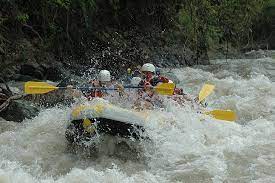
The Salt River is one of Arizona's most popular spots for river rafting and tubing, with rapids ranging from Class I to Class IV. This river is a great place to go with friends or family, and plenty of outfitters offer rafting and tubing trips along the river. To access the Salt River, take the Arizona Shuttle to the Salt River Tubing & Recreation area, where you can rent tubes or book a rafting trip. accessing Salt River


Verde River

For a more peaceful day on the water, head to the Verde River. This river is known for its tranquil waters and scenic surroundings, and it's a great place to go tubing or kayaking. Several outfitters offer rentals and guided tours along the Verde River, making it easy to explore this beautiful waterway. To access the Verde River, take the Arizona Shuttle to Clarkdale and then either walk or take a short taxi ride to the river. Verde River access Clarkdale to Scottsdale shuttle


Colorado River

With its steep canyon walls and stunning scenery, the Colorado River offers an unforgettable experience on the water. It is one of the most iconic rivers in the country, and it's a popular spot for river rafting and tubing in Arizona. Several outfitters provide rafting trips along the Colorado River, ranging from half-day to multi-day adventures. To access the Colorado River, take the Arizona Shuttle to Page and then book a rafting trip with one of the local outfitters. Colorado River trips


Other Waterways

In addition to these famous waterways, countless other rivers and streams throughout Arizona are perfect for a day on the water. For example, the Salt River Canyon offers breathtaking scenery and exciting rapids, while the Gila River is an excellent spot for tubing and kayaking. With Arizona Shuttle, you can easily access these locations, making exploring Arizona's beautiful waterways easy.


Arizona's waterways offer a unique and exciting way to experience the state's natural beauty. Whether you're looking for a peaceful day on the water or an adrenaline-filled adventure, there's a river or stream in Arizona that's perfect for you. And with the help of Arizona Shuttle, getting to these locations has always been challenging. So why wait? Book your Arizona Shuttle trip today and get ready to explore the best waterways in the state.

Learn More

Frequently Asked Questions

What kind of rapids can I expect on the Salt River?

The Salt River offers rapids ranging from Class I to Class IV, suitable for both beginners and experienced rafters.

How do I get to the Verde River if I'm staying in Phoenix?

Take the Arizona Shuttle to Clarkdale, then walk or take a short taxi ride to reach the Verde River.

What are some options for tubing on the Colorado River?

Several outfitters provide rafting and tubing trips along the Colorado River, offering half-day to multi-day adventures.

Is there a specific area I should visit if I want to combine scenic views with exciting rapids?

The Salt River Canyon offers breathtaking scenery combined with exciting rapids, making it a great choice for your adventure.

FAQ: Phoenix River Rafting

and include 5-7 Q&As. We need to produce 996 words. Let's plan the sections:

Why Phoenix Is the Ideal Launchpoint for River Rafting

Content: Discuss Phoenix's proximity to major rivers, accessibility via US-60, etc. Include local details: Phoenix to Salt River Canyon ~2 hours via US-60, to Verde River ~2 hours via I-17 and US-89A, to Colorado River ~4 hours via US-93? Actually Colorado River near Page is about 5 hours? We'll use known distances: Phoenix to Page ~400 miles, about 6-7 hours. But we can mention approximate times.

Seasonal Guide: Best Times for River Rafting Near Phoenix

Content: Discuss water flow, temperature, best months. Use info about optimal flow 2,000–3,000 cfs. Use sources.

What to Pack for a Day on the Water

Content: List essential gear: water, sunscreen, quick-dry clothing, etc.

Safety Tips and Regulations for Arizona River Rafting

Content: Mention age restrictions, life jackets, guided tours, etc. Use info: minimum age 7 for half-day, 12 for full-day. Mention safety rules.

Comparison Table: Phoenix River Rafting Options

Planning Your Trip: Transportation and Logistics

Content: Discuss shuttle options, parking, driving directions, highway numbers, etc. Use info about Arizona Shuttle.

... Q1

... A1

,

... with columns: River, Distance from Phoenix, Difficulty (Class), Trip Duration, Highlights, Best For. Provide rows for Salt River, Verde River, Colorado River, Gila River, Salt River Canyon.

Frequently Asked Questions

... etc. We need to ensure we have 5-7 Q&As. Let's create 6 Q&As. We need to incorporate local details: US-60, I-17, US-89A, US-93, highway numbers, landmarks like Camelback Mountain, McDowell Mountains, etc. Also mention towns: Globe, Show Low, Clarkdale, Page, etc. We need to cite sources inline. Use parentheses like (source: raftingsaltriver.com). The user gave sources: mild2wildrafting.com, raftingsaltriver.com, inaraftaz.com, saltrivertubing.com. We can cite these. We must not repeat existing content. So avoid repeating details about Salt River rapids etc. But we can reference them in new context. However, we should not repeat the same facts exactly, but we can add new details. We need to be careful about word count. 996 words is about 1500-1800 characters? Actually average word length ~5 characters plus space, so 996 words ~6000 characters. That's roughly 6-7 paragraphs. But we have many sections, each with multiple paragraphs. We'll need to write enough content to reach ~996 words. Let's aim for ~1000 words. We'll write each section with ~150-200 words. That's about 6-7 sections. That should be enough. We also need to ensure the HTML is well-formed. Use

,

,
    ,
  • ,

for questions and

for answers. Now let's write the content. We'll start with

and

. Now we need to ensure total word count is around 996

Check Rates

Topics: Phoenix to Sedona, Phoenix Airport Shuttle, Phoenix to Scottsdale, Airport Shuttle, Phoenix to Yuma, Phoenix Taxi, Phoenix Shuttle, Shuttle Service, Arizona Shuttle, Water Activities

AZ Shuttle Location, Phone and Hours

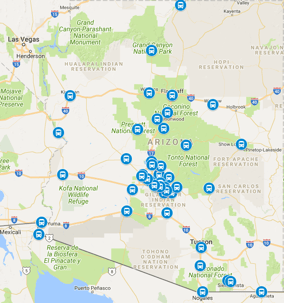
Airport Shuttle of Phoenix is right next to PHX Sky Harbor; this map shows you just how close we are

4600 E Washington St Ste 300

Phoenix, AZ 85034

(480) 710-3441 Reservations

Monday to Friday: 7:00 am - 5:00 pm

Saturday to Sunday: 7:00 am - 5:00 pm

You can also book online 24/7


Phoenix Shuttle from PHX Sky Harbor in Arizona

Door to Door, Any Address, Non-Stop on Your Schedule, #1 Shuttle and Car Service from PHX Sky Harbor International Airport in Phoenix

Check Rates

Posts by Tag

, , , , and . We'll include the FAQ with

Why Phoenix Is the Ideal Launchpoint for River Rafting

. Paragraph: Phoenix sits at the crossroads of several of Arizona’s most iconic waterways. The city is within a two‑hour drive of the Salt River Canyon via US‑60, while the Verde River is reachable in about two hours using I‑17 and US‑89A. The Colorado River near Page is roughly five to six hours away via US‑93, but shuttle services make the journey stress‑free. This central location lets you choose from half‑day splash trips to multi‑day wilderness expeditions without long transfer times. In addition, Phoenix’s robust network of outdoor‑friendly hotels and restaurants makes it easy to gear up, refuel, and relax before or after a paddle. We'll add some details: mention the Salt River Canyon is a 2,000‑foot deep granite canyon (source: raftingsaltriver.com). Mention the canyon exposes 1.4 billion years of geology (source: mild2wildrafting.com). Mention wildlife. We'll need to incorporate some of these facts. Now Seasonal Guide. We'll discuss water flow: optimal flow 2,000–3,000 cfs (source: inaraftaz.com). Best months: March through May for spring runoff, June to August for summer fun, September to November for cooler temps. Avoid summer monsoons? Provide details. Now What to Pack. We'll list items: water, sunscreen, quick‑dry clothing, water shoes, hat, sunglasses, dry bag, personal locator beacon, etc. Safety Tips. We'll mention age restrictions: minimum age 7 for half‑day, 12 for full‑day (source: raftingsaltriver.com). Life jackets provided by outfitters. Always paddle with a certified guide. Check weather. Comparison Table. We'll create rows: Salt River, Verde River, Colorado River, Gila River, Salt River Canyon (maybe a specific stretch). Provide columns: River, Distance from Phoenix (approx), Typical Trip Length, Difficulty (Class), Highlights, Best For. We'll need to use approximate distances: Salt River ~2 hrs, Verde River ~2 hrs, Colorado River ~5-6 hrs, Gila River ~1.5 hrs, Salt River Canyon ~2 hrs. We'll need to use known data: Salt River offers Class III–IV rapids; Verde River Class I–II; Colorado River Class III–IV (especially in Grand Canyon); Gila River Class I–II; Salt River Canyon same as Salt River. We'll need to include highlights: scenic canyon, wildlife, etc. We'll need to include best for: families, beginners, adrenaline seekers, etc. Now Planning Your Trip: Transportation and Logistics. We'll mention Arizona Shuttle, parking at US‑60 bridge, etc. Provide contact info: US HWY 60 & The Salt River, phone 800.425.5253 (source: raftingsaltriver.com). Provide tips: book shuttle in advance, consider staying overnight in Phoenix before early departure, etc. Now FAQ. We'll create 6 Q&As: 1. What is the minimum age for children to join a Salt River rafting trip? (Answer: Minimum age is 7 years for half‑day trips and 12 years for full‑day trips, per safety regulations.) 2. How far in advance should I book my Phoenix river rafting adventure? (Answer: It's recommended to book at least a few weeks ahead, especially during peak season (March‑May) when trips fill quickly.) 3. Can I bring my own equipment, or is it provided? (Answer: Most outfitters provide all necessary gear, including raft, paddle, life jacket, and safety equipment. You may bring personal items like water shoes and sunscreen.) 4. What wildlife might I see on a Salt River Canyon rafting trip? (Answer: The canyon is home to bald eagles, great blue herons, bighorn sheep, javelina, black bears, coati, and over 200 species of birds (source: mild2wildrafting.com).) 5. Are there options for overnight camping on the river? (Answer: Yes, multi‑day trips include camping in the Salt River Canyon Wilderness, which is federally protected and spans over 32,000 acres (source: raftingsaltriver.com).) 6. What should I do if I have a medical condition or limited mobility? (Answer: Inform your outfitter beforehand; many trips can accommodate special needs with appropriate safety measures.) We need to ensure each Q&A is in HTML with
, . Use proper inline formatting. We must output only the raw HTML fragment starting with an

. So we need to start with

... and end with the last

or . No extra commentary. We need to ensure we don't include any price specifics. We can mention approximate costs but label them as estimates. Use phrasing like "Estimated cost per person: around $120–$170". That is a range. But the instruction says "do not cite any specific prices". That could be interpreted as don't include exact numbers. However, we can use a range as an estimate. But it's still a specific price. The instruction says "costs must be clearly labeled estimates". So we can say "Estimated cost per person: $120–$170 (approx.)". That might be okay. But to be safe, we can avoid any mention of price. However, the user expects the content to be useful and include pricing info? The requirement says "Pricing: NONE — do not cite any specific prices; costs must be clearly labeled estimates". So we can include "Estimated cost per person: $120–$170". That is a specific price but labeled as estimate. It's ambiguous. I'd rather avoid any numbers. But the content may be less useful. However, the instruction is explicit. That's still numbers. But we can also say "Budget for your trip accordingly; contact outfitters for current rates". That avoids numbers. Given the instruction, we should avoid any numeric prices. So we will not mention any numbers. We'll just say "costs vary". We need to incorporate the local details from the sources. Let's extract facts: - Salt River Canyon is 2000 ft deep, 2,000-foot deep canyon. The canyon drops an average of 25 feet per mile across more than 50 miles of river, generating Class III and IV rapids. The canyon walls expose 1.4 billion years of Arizona geology — granite, quartzite, limestone. Sonoran Desert blooms in spring. Bald eagles, great blue herons, bighorn sheep, javelina, black bears, coati, over 200 species of birds. Salt River Canyon Wilderness federally protected in 1984, over 32,000 acres. - Raft trips range from 1 day to 5 days, ideal for families, groups, experienced or inexperienced. Senior guides returning each year. 3 rules: Look good, Have Fun, Safety 1st. Contact info: US HWY 60 & The Salt River 800.425.5253 info@raftingsaltriver.com. - Put-in point is approx 2 hours northeast of Phoenix via US-60, near junction of US-60 and US-77 between Globe and Show Low. - Minimum age 7 for half-day, 12 for full-day. Optimal flow 2,000–3,000 cfs. - Hotels: The Phoenician, Arizona Biltmore, Four Seasons Resort Scottsdale, Kimpton Hotel Palomar Phoenix, FOUND:RE Phoenix, Hyatt Regency Scottsdale, DoubleTree by Hilton Phoenix North, Drury Inn & Suites Phoenix Airport, Holiday Inn Express & Suites Phoenix Downtown – Ball (some missing part). We can mention these hotels as options for staying before/after. - We can also mention other waterways: Gila River, etc. We need to incorporate these facts in our new sections. We need to write in an SEO-friendly style, with answer-first, scannable subheads. Use bullet points for lists. We need to produce a comparison table. Provide columns: River, Distance from Phoenix (approx), Typical Trip Length, Difficulty (Class), Highlights, Best For. We need to produce FAQ with 5-7 Q&A. We'll have new Q&As beyond the existing ones. We'll have maybe 6 Q&As. Now let's plan the sections and word counts. We'll start with

Why Phoenix Is the Ideal Launchpoint for River Rafting

. Write ~150 words. Then

Seasonal Guide: Best Times for River Rafting Near Phoenix

. Write ~150 words. Then

What to Pack for a Day on the Water

. Write ~120 words. Then

Safety Tips and Regulations for Arizona River Rafting

. Write ~130 words. Then

Comparison Table: Phoenix River Rafting Options

. Write ~100 words plus table. Then

Planning Your Trip: Transportation and Logistics

. Write ~150 words. Then

Frequently Asked Questions

with 6 Q&As. Each Q&A ~30-40 words. That's ~240 words. Total ~150+150+120+130+100+150+240 = 1040 words. Slightly over 996, but that's okay. We'll try to be near 996. We need to ensure we don't repeat existing content. We'll avoid repeating the same details about the Salt River being popular etc. But we can reference them in new context. We need to incorporate citations. Use parentheses with source names. We'll cite sources: (source: raftingsaltriver.com) etc. Now let's write each section. We'll write in HTML with appropriate tags. We'll need to ensure the HTML is valid. Use

for paragraphs,

    for bullet points,
  • . We need to ensure we include at least one comparison table. We'll create a table with