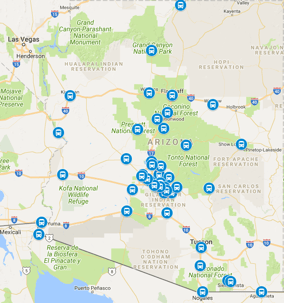
Arizona boasts an impressive public art scene and unique architecture, making it a must-visit destination for art and architecture enthusiasts. With easy access through shuttle services, exploring the state's best public art and architecture is a breeze. Scottsdale transportation guide Here's a guide to some of the most exciting destinations to add to your itinerary. Scottsdale transportation guide
Scottsdale Public Art Walk
Scottsdale is a hub for public art, featuring a diverse array of installations throughout the city. The Scottsdale Public Art Walk is a self-guided tour that takes visitors through the city's vibrant arts district. With over 70 works of art along the way, the tour offers a unique look at the city's creative community. Highlights include Robert Indiana's "Love" sculpture and the "Diamond Bloom" installation by Walter Productions.
Frank Lloyd Wright Buildings in Phoenix
Frank Lloyd Wright is one of the most renowned architects in American history, and Arizona is home to several of his most notable designs. The Arizona Biltmore, Taliesin West, and the David and Gladys Wright House are just a few of the architect's buildings that can be visited in the state. Frank Lloyd Wright buildings in Phoenix These iconic structures showcase Wright's distinct style and innovative designs, making them must-see destinations for architecture enthusiasts.
Colossal Cave Mountain Park
Located in Vail, Arizona, the Colossal Cave Mountain Park is home to unique architecture and stunning natural beauty. The park's cave tours take visitors through a living cave system, showcasing some of the most amazing rock formations in the state. Colossal Cave Mountain Park access Above ground, visitors can explore the park's historic buildings, including the Civilian Conservation Corps-built entrance building and the Colossal Cave Ranch House. Phoenix to Colossal Cave The park is a fascinating destination for those interested in architecture and natural wonders.
Taliesin West
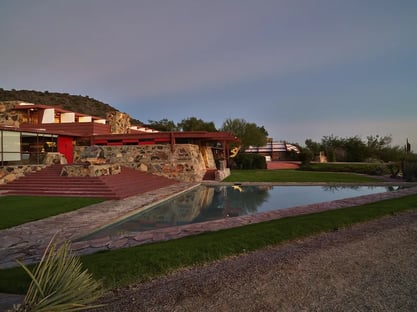
In Scottsdale, Taliesin West is Frank Lloyd Wright's winter home and architectural school. The site offers a variety of tours, including a famous Insights Tour, which takes visitors through the main living quarters and workspace. Taliesin West tours The complex also includes a theater, music pavilion, and Wright's private office. Taliesin West is a must-visit destination for architecture enthusiasts and anyone interested in the history of American design.
Phoenix Art Museum
The Phoenix Art Museum is comprehensive, featuring a diverse collection of over 20,000 works. The museum's collection includes contemporary and modern art, fashion design, photography, and art from across the globe. With rotating exhibitions and special events, there's always something new to see at the Phoenix Art Museum.
With various impressive public art installations and unique architectural wonders, Arizona is a destination not to be missed. Arizona shuttle services make exploring the state's best art and architecture easy and accessible. Plan your trip today and experience the creative spirit of Arizona for yourself.
Frequently Asked Questions
What are some must-see Frank Lloyd Wright buildings in Phoenix?
The Arizona Biltmore, Taliesin West, and the David and Gladys Wright House are notable Frank Lloyd Wright designs in Phoenix.
Can I visit both Scottsdale Public Art Walk and Taliesin West on the same day?
Yes, you can easily visit both by planning your route to cover these two destinations within a day.
What kind of tours are available at Colossal Cave Mountain Park?
Colossal Cave offers cave tours showcasing rock formations and explores historic buildings like the Civilian Conservation Corps-built entrance building.
Is there a specific highlight I shouldn't miss on the Scottsdale Public Art Walk?
Definitely visit Robert Indiana's 'Love' sculpture and Walter Productions' 'Diamond Bloom' installation for standout pieces.
Beyond the Big Names: More Art and Architecture in Arizona Worth the Drive
If you've already walked Scottsdale's arts district and toured Frank Lloyd Wright's desert laboratory, Arizona still has plenty to offer. The state's art and architecture story stretches far beyond the Phoenix metro area — from a Spanish colonial mission south of Tucson to an experimental urban laboratory rising out of the high desert along Interstate 17. This guide covers the destinations that round out any serious art and architecture itinerary in Arizona, along with practical routing tips for seeing them efficiently.
Heard Museum: Arizona's Home for Native American Art
Founded in 1929, the Heard Museum on Central Avenue in Phoenix is one of the country's most respected institutions dedicated to American Indian art. Its collection spans jewelry, textiles, katsina dolls, pottery, and contemporary Indigenous painting, and the museum's signature exhibition on the federal Indian boarding school era is regarded as one of the most important of its kind. The museum also hosts the annual Heard Museum Guild Indian Fair & Market, which draws artists and collectors from across the Southwest. Its location near the Central Avenue light rail line makes it easy to pair with downtown Phoenix stops like the adjoining Central Library and the public art scattered through the Civic Space Park area.
Roosevelt Row: Phoenix's Mural District
Downtown Phoenix's Roosevelt Row Arts District — the stretch of Roosevelt Street running east from Central Avenue toward Seventh Street — has transformed over the past two decades into the city's most visible canvas for street art. Murals rotate regularly on the walls of galleries, coffee shops, and converted warehouses, and the district anchors events like First Friday, the monthly art walk centered along Roosevelt and Garfield Streets. Architecture fans will also notice the mix of mid-century commercial buildings and adaptive-reuse projects that give the neighborhood its character. It pairs naturally with a visit to the Phoenix Art Museum, which sits just to the west on Central Avenue.
Chapel of the Holy Cross: Sedona's Iconic Desert Church
Rising directly out of the red rock mesas of Sedona, the Chapel of the Holy Cross is one of the most photographed pieces of architecture in the state. Completed in 1956, the chapel was the vision of local sculptor Marguerite Brunswig Staude and was designed with the involvement of architects associated with Frank Lloyd Wright's Taliesin fellowship. The building's towering cross-shaped window frames the Sedona landscape, and the interior is intentionally spare so that the setting becomes the centerpiece. The chapel sits off Highway 179 in the Coconino National Forest, roughly a five-minute drive from the "Y" intersection in uptown Sedona, making it a simple add-on to any Sedona trip.
Mission San Xavier del Bac: The White Dove of the Desert
Southwest of Tucson, on the Tohono O'odham Nation, stands Mission San Xavier del Bac, often called the "White Dove of the Desert." Jesuit missionary Father Eusebio Kino founded the site in 1692, and the striking white church visible today was completed in 1797 — making it the oldest intact European-built structure in Arizona. The interior is filled with original statuary, painted decoration, and baroque detailing that has been the focus of extensive conservation work in recent decades. The mission remains an active parish serving the Tohono O'odham community, so visitors should check service schedules before planning a trip.
Arcosanti: Paolo Soleri's Experimental City in the Desert
About 70 miles north of Phoenix along Interstate 17, near the community of Cordes Junction, sits Arcosanti — the experimental "arcology" project begun by Italian-American architect Paolo Soleri in 1970. Soleri, a former student of Frank Lloyd Wright, coined the term arcology to describe architecture fused with ecology, and Arcosanti remains an ongoing construction project shaped by workshops and volunteers from around the world. Guided tours walk visitors through the concrete apses, vaults, and residential structures, and the site's famous bronze and ceramic wind bells are cast on-site in the Soleri bell foundry. Architecture enthusiasts who want to trace the Soleri lineage should also visit Cosanti, his earlier studio and residence in Paradise Valley, just a few minutes from Scottsdale.
Biosphere 2: A Laboratory Built Like a Landmark
North of Tucson in Oracle, Biosphere 2 is one of the most unusual architectural and scientific landmarks in the United States. Built in the late 1980s as a sealed-ecosystem experiment and now operated by the University of Arizona, the glass-and-steel complex contains a rainforest, an ocean with a coral reef, a desert, and other biomes under one enormous roof. Guided tours take visitors through the biomes and the technical corridors underneath the facility, offering a rare look at ambitious, large-scale experimental architecture from the turn of the 1990s.
Comparing Arizona's Must-See Art and Architecture Destinations
Use this quick-reference table to decide which sites fit your route and interests.
| Destination | Location | Best Known For | Ideal For |
|---|---|---|---|
| Heard Museum | Central Phoenix | American Indian art and culture | Museum lovers, art collectors |
| Roosevelt Row | Downtown Phoenix | Murals, galleries, First Friday art walk | Street art fans, casual strollers |
| Chapel of the Holy Cross | Sedona, off Highway 179 | Modern church built into red rock | Photographers, scenic drives |
| Mission San Xavier del Bac | Tohono O'odham Nation, near Tucson | Baroque Spanish colonial mission (1797) | History buffs, architecture purists |
| Arcosanti | Off I-17 near Cordes Junction | Paolo Soleri's arcology experiment | Design students, Wright devotees |
| Biosphere 2 | Oracle, north of Tucson | Sealed glass ecosystem facility | Families, science-minded travelers |
Suggested Routes for an Art and Architecture Road Trip
Because Arizona's highlights are spread across the state, smart routing saves hours. The Interstate 17 corridor connects Phoenix to both Arcosanti (about an hour north) and Sedona (roughly two hours north), making a single day trip feasible for the Chapel of the Holy Cross. The Taliesin West, Heard Museum, Phoenix Art Museum, and Roosevelt Row cluster all sit within the Phoenix metro and can be combined over a weekend. For southern Arizona, Interstates 10 and 19 link Biosphere 2 in Oracle with Mission San Xavier del Bac southwest of Tucson — a loop that rewards a full day. Travelers flying into Phoenix Sky Harbor International Airport can arrange ground transportation to any of these destinations without needing to rent a car, especially useful for the wine-country and red-rock routes where scenic drives are part of the experience.
Frequently Asked Questions About Art and Architecture in Arizona
What is the most famous piece of architecture in Arizona?
Taliesin West in Scottsdale is widely considered the state's most famous architectural landmark, serving as Frank Lloyd Wright's winter home, studio, and school from 1937 onward. The Chapel of the Holy Cross in Sedona and Mission San Xavier del Bac near Tucson are also strong contenders.
Where can I see Native American art in Arizona?
The Heard Museum in Phoenix is the state's premier institution for American Indian art, with a collection spanning pottery, jewelry, textiles, and contemporary works. Pueblo Grande Museum and the cultural centers at Scottsdale's Civic Center also feature Indigenous art and history.
Is Arcosanti still being built?
Yes. Arcosanti has been under continuous construction since 1970 and remains an active experimental community. Visitors can take guided tours and purchase the site's signature Soleri wind bells, which are cast on the property.
Can you visit the Chapel of the Holy Cross in Sedona?
Yes, the chapel is open to visitors for self-guided visits, though hours vary seasonally and it closes for weddings, masses, and special events. It's located off Highway 179 in the Coconino National Forest, a short drive from uptown Sedona.
What is the oldest standing building in Arizona?
Mission San Xavier del Bac, completed in 1797, is generally regarded as the oldest intact European-built structure in Arizona. The site was originally established in 1692 by Father Eusebio Kino.
How many days do I need to see Arizona's art and architecture?
Most travelers can cover the Phoenix and Scottsdale highlights — Taliesin West, the Heard Museum, the Phoenix Art Museum, and the Scottsdale Public Art Walk — over two to three days. Adding Sedona, Arcosanti, and the Tucson-area sites typically requires another two to three days.
Is Biosphere 2 worth visiting for someone interested in architecture?
Yes. While it is primarily a science facility, the scale and ambition of its glass-and-steel structure make it a fascinating destination for architecture enthusiasts, and the guided tours explain both its design and its experimental history.