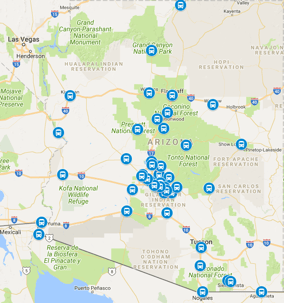
Arizona is popular for its stunning desert landscapes, and a road trip from Phoenix to Yuma is the perfect way to explore what this state offers. With Arizona Shuttle, you can sit back, relax, and let the driving be taken care of while you enjoy the unique attractions and historic landmarks along the way. Yuma to Scottsdale shuttle
Visit Montezuma Castle National Monument
Start your road trip with a visit to Montezuma Castle National Monument, located just a short drive north of Phoenix. Montezuma Castle details This ancient cliff dwelling is one of the best-preserved examples of pre-Columbian architecture in the Southwest. The Sinagua people built the five-story structure over 800 years ago, and it is now a designated National Monument. Visitors can explore the site on a self-guided tour and learn about the area's fascinating history.
The Desert Bar in Parker
Next is a stop at The Desert Bar, a unique outdoor bar in the middle of the desert near Parker. This one-of-a-kind establishment is only open on weekends from October to April, and getting there requires a 4-mile drive on a dirt road. But the journey is well worth it for the stunning views and lively atmosphere. The Desert Bar serves refreshing cocktails and delicious barbecue; live music adds to the festive vibe.
Explore the Yuma Territorial Prison State Historic Park
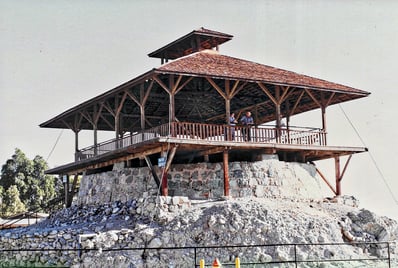
Step back to the Yuma Territorial Prison State Historical Park, which served as a prison from 1876 to 1909. Yuma Territorial Prison history The prison housed some of the West's most notorious criminals, including stagecoach robber Pearl Hart and train robber Burt Alvord. Visitors can tour the cells and learn about the prison's history and the lives of its inmates. The park also has a museum with exhibits on the prison and the history of the Yuma area.
Check out the Castle Dome Mine Museum
The Castle Dome Mine Museum is a fascinating look at the mining history of Arizona. Located about 50 miles north of Yuma, this museum features exhibits on mining equipment, mineral specimens, and the daily life of miners. The museum is located in a well-preserved mining camp established in the 1860s. Visitors can tour the underground mine and see what it was like to work in the mines in the late 19th and early 20th centuries. Castle Dome Mine Museum exhibits
Visit the Quartermaster Depot State Historic Park
The Quartermaster Depot State Historical Park is a tribute to the military history of the Yuma area. The depot was established in 1864 to supply Army posts in Arizona and New Mexico, and it played a crucial role in the Indian Wars of the late 19th century. Visitors can visit the historic buildings and learn about the depot's role in supplying troops and protecting settlers in the region.
In conclusion, a road trip from Phoenix to Yuma with Arizona Shuttle is a great way to experience Arizona's desert landscape's unique attractions and historical landmarks. This road trip has something for everyone, from ancient cliff dwellings to outdoor bars to historic prisons. So pack your bags, hit the road, and get ready to make some unforgettable memories.
Frequently Asked Questions
What time is The Desert Bar open on weekends?
The Desert Bar is open only on weekends from October to April.
Can I visit the Montezuma Castle National Monument with Arizona Shuttle?
Yes, you can easily include a stop at Montezuma Castle National Monument during your trip with Arizona Shuttle.
What kind of exhibits are in the Castle Dome Mine Museum?
The museum features exhibits on mining equipment, mineral specimens, and daily life of miners from the 1860s.
Who were some notable inmates at Yuma Territorial Prison?
Notable inmates included stagecoach robber Pearl Hart and train robber Burt Alvord.
The Sonoran Desert's Most Iconic Resident: The Saguaro Cactus
No discussion of the best of the Arizona desert is complete without the saguaro cactus. These towering plants are found only in the Sonoran Desert and can live for over 100 years, making them living monuments to the landscape itself. According to the National Park Service, saguaros typically begin growing their famous arms only after many decades — often around 75 to 100 years — which means every multi-armed specimen you photograph is a true senior citizen of the desert.
The best place to stand among these giants is Saguaro National Park, which is split into two districts flanking Tucson and protects thousands of these iconic cacti that can grow taller than a four-story building. The Rincon Mountain District (East) sits at 3693 South Old Spanish Trail, Tucson, AZ 85730, while the Tucson Mountain District (West) is located at 2700 North Kinney Road, Tucson, AZ 85743. If you're planning shuttle travel from Phoenix to Tucson or onward through southern Arizona, both districts pair easily with a stop along Interstate 10.
Comparing the Two Districts of Saguaro National Park
| Feature | Rincon Mountain District (East) | Tucson Mountain District (West) |
|---|---|---|
| Address | 3693 South Old Spanish Trail, Tucson, AZ 85730 | 2700 North Kinney Road, Tucson, AZ 85743 |
| Known for | Dense saguaro forests and mountain foothills | Classic desert scenery and sunset viewpoints |
| Best for | Longer drives and hiking | Quick visits and photography |
Beyond the saguaro, southern Arizona hides a botanical treasure: Organ Pipe Cactus National Monument along the border west of Ajo. The monument sprawls across more than 330,000 acres of wilderness, offering a level of solitude that feels increasingly rare, and it shelters 28 other cactus species beyond the saguaro — a dream destination for anyone who appreciates spiky plants with attitude.
Best of the Desert: How the Community's Choice Awards Work
The best of the Arizona desert isn't only about landscapes — it's also about the local businesses that make communities across the state stand out. The Best of the Desert Community's Choice Awards puts that power in the hands of the local community, which nominates and votes for favorite companies in more than 120 categories, from dining and beauty to services and beyond. Each year the program recognizes over 360 businesses and organizations, all thanks to community involvement.
Here's how it works, based on the 2026 program: the nomination round runs December 10–31, 2025, and it all begins with nominations from locals. After nominations close, the top five in each category move on to the voting round, held February 11–25, 2026. Winners are announced May 15, 2026, and the complete results publish May 17, 2026 in the Arizona Republic. As an added incentive, users who nominate their favorites in 25 or more categories are entered to win a $250 gift card, and another $250 gift card goes to a lucky voter who casts ballots in 25 or more categories. Whether you run a business or simply love supporting local spots, it's a genuine chance to shape what "best of the desert" means.
2026 Program Timeline at a Glance
| Round | Dates | What Happens |
|---|---|---|
| Nomination Round | December 10–31, 2025 | Community submits favorites; 25+ categories entered for gift card drawing |
| Voting Round | February 11–25, 2026 | Top five in each category advance; 25+ categories voted for gift card drawing |
| Winners Announced | May 15, 2026 | Results revealed; gala photos and winners section published |
| Print Publication | May 17, 2026 | Complete results appear in the Arizona Republic |
More Desert Wonders Beyond the Phoenix–Yuma Corridor
If your Arizona itinerary stretches beyond the southern route, these landmarks belong on any "best of" list:
Horseshoe Bend, Page
Near Page, off US Route 89, the Colorado River carved a perfect horseshoe-shaped meander through Navajo sandstone, creating a 1,000-foot drop that makes your stomach do backflips just looking at it. For those who want to go deeper into the nearby slots and river sections, only 64 people per day receive permits, awarded through an advance online lottery four months ahead and a daily lottery held two days before the hiking date via Recreation.gov.
Petrified Forest National Park
Along Interstate 40 in northeastern Arizona, Jurassic-age sand dunes turned to stone over 190 million years ago, and erosion has slowly revealed the crossbedding patterns that create those mesmerizing wavy stripes in the Painted Desert. The park also contains over 600 archaeological sites, including ancient pueblos and petroglyphs left by people who called this area home long before European contact.
Red Rock State Park, Sedona
This 286-acre nature preserve sits along Oak Creek, creating a lush riparian habitat that contrasts beautifully with the towering red sandstone cliffs rising all around. It's a quieter alternative to Sedona's busier trailheads on State Route 89A, and pairs well with a Phoenix to Sedona shuttle plan.
Lost Dutchman State Park, Apache Junction
At the base of the Superstition Mountains along US Route 60, the park takes its name from the Lost Dutchman's Gold Mine, a legendary mother lode supposedly hidden in these rugged peaks by a German immigrant named Jacob Waltz in the 1800s. The Superstitions themselves are geological wonders formed from volcanic tuff and lava flows, and they anchor the eastern edge of the Phoenix metro. For other scenic drives from the city, see our guides to the Phoenix to Flagstaff route and Phoenix to Grand Canyon travel.
Quick Tips for Exploring the Best of the Arizona Desert
- Carry more water than you think you need — desert temperatures can be extreme year-round.
- Visit desert attractions early in the morning or near sunset for cooler temperatures and better light.
- Dirt-road destinations like The Desert Bar require appropriate vehicles; check conditions before you go.
- Book shuttle travel in advance for routes like Tucson to Phoenix and Yuma to Scottsdale to keep your trip flexible.
- Support local: whether it's a roadside stand or an award-winning business, community favorites are often the real best of the desert.
Fans of the awards program can even show their support with official merchandise, including a 20 oz insulated stainless tumbler with sip lid and a 40 oz insulated Stanley tumbler with handle, lid, and straw — each carrying the undated program logo so it stays useful year after year.
Frequently Asked Questions
Where can I see the largest saguaro cacti in Arizona?
Saguaro National Park near Tucson protects thousands of saguaros across its two districts — the Rincon Mountain District (East) and Tucson Mountain District (West) — where the cacti can grow taller than a four-story building.
How long do saguaro cacti live?
Saguaros are found only in the Sonoran Desert and can live for over 100 years, typically growing their first arms after about 75 to 100 years.
How do I enter the Best of the Desert Community's Choice Awards?
The nomination round for the 2026 program ran December 10–31, 2025. After nominations, the top five in each of the more than 120 categories advanced to the voting round, held February 11–25, 2026, with winners announced May 15, 2026.
When are the Best of the Desert winners published?
Winners are announced May 15, 2026, and the complete results publish May 17, 2026 in the Arizona Republic.
Do I need a permit for Horseshoe Bend?
Viewing Horseshoe Bend itself does not require a permit, but only 64 people per day receive permits for the associated guided experience, awarded through an advance online lottery four months ahead and a daily lottery two days before the hiking date via Recreation.gov.
What is the Lost Dutchman's Gold Mine?
It's a legendary mine supposedly hidden in the Superstition Mountains by a German immigrant named Jacob Waltz in the 1800s. Lost Dutchman State Park in Apache Junction preserves the area at the base of the range.
How many businesses are recognized in the Best of the Desert awards?
Each year the program recognizes over 360 businesses and organizations across more than 120 categories, thanks to community nominations and votes.