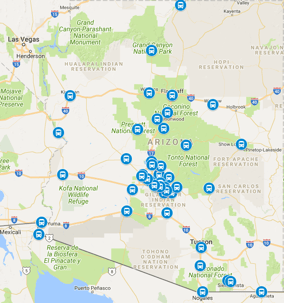
Most riders see the shuttle that pulls up to their terminal and never think twice about what happens behind the scenes. airport shuttle pickup zones At Airport Shuttle of Phoenix, that behind-the-scenes technology is a big reason our shared shuttles and private vans run on time, 24/7, across Phoenix, Scottsdale, Mesa, Sedona, and Flagstaff.
1. Reservations that price themselves
Every online booking on our site flows into a reservation platform that prices each trip based on distance, pickup zone, and vehicle type - no phone tag, no manual quotes. When you book a shuttle online, you get an instant, accurate price and confirmation, and our dispatch team sees the trip in real time.
2. Dispatch and vehicle assignment
Behind the scenes we use Passenger Transportation Pro (PTP), a transportation operations platform, to manage driver schedules, vehicle assignment, and trip status. Instead of a whiteboard and phone calls, every driver starts the day with a route built by software that accounts for flight arrival times and pickup windows. expert airport pickup tips
3. GPS tracking and flight monitoring
Each vehicle reports its position continuously, and we watch inbound flights so drivers know about early arrivals or delays before passengers even land. stress-free airport pickups at Sky Harbor That is how our Phoenix airport shuttles meet you when you land - not when a paper schedule guessed you would land.
4. Automation of the busywork
Reservation confirmations, driver pay calculations, and routine customer messages are automated with workflow tooling - the same "let software handle repetitive tasks" philosophy behind products like AutomateAny. Our team spends their time on customer service and driving, not retyping data.
5. AI tools where they genuinely help
We also use AI for practical jobs - forecasting demand around holidays, flagging unusual booking patterns, and keeping route content on our website current. Those capabilities come from custom development work and AI platforms such as Better AI, which builds AI chat, AI API integrations, and custom software for operations teams like ours.
What this means for your ride
None of this exists for its own sake. It exists so that when you land at Sky Harbor at 11 p.m., a clean shuttle is waiting, your price is the one you were quoted, and your driver already knows your flight was 20 minutes late. Book your next trip at airportshuttleofphoenix.com and let the technology do the coordinating.
Why Fleet Tracking Is More Than a Tech Upgrade
It is tempting to think of GPS tracking as a gadget bolted onto a van. In practice, it changes the entire operating model. Before telematics, a dispatcher in Phoenix learned about a problem when a driver called in - a flat tire on the SR-51, a missed terminal change at Sky Harbor, an I-10 backup near the Deck Park Tunnel. Now the vehicle itself reports its status continuously, and the dispatcher sees the problem forming before the passenger feels it.
Industry analysts who focus on shuttle and taxi operations make the same point: shuttle operations demand far more than static routes and manual scheduling, and tracking software has become the backbone of scalable fleet management (Mobility Infotech, "Shuttle Management Software Architecture: Smart Systems Powering Scalable Fleet Operations," January 2026). We run our fleet that way by choice. Every position report, every trip status update, and every route adjustment feeds the same system our dispatchers watch all day - and that is what lets a shared shuttle leaving Mesa still make a tight pickup window at Terminal 4.
Why the U.S. Shuttle Industry Needs Intelligent Digital Tools
Airport shuttle work is one of the hardest scheduling problems in ground transportation. Riders arrive in waves tied to airline schedules that shift daily. Traffic on Loop 101, Loop 202, and I-17 changes by the hour. A single van might serve Sky Harbor, Old Town Scottsdale, and Tempe in the same shift. Manual methods - spreadsheets, whiteboards, phone calls - simply cannot keep that many moving parts aligned, which is why industry coverage keeps pushing operators toward intelligent dispatch and tracking platforms (Mobility Infotech, "Taxi Dispatch Software Trends: US Mobility in 2026").
We see the same reality from the driver's seat. When a flight from Denver lands 40 minutes early, software flags it and the driver's route reorders itself. When a monsoon storm slows everything on the 202, the dispatch board shows which trips are at risk so a human can make the call that matters. The tools do not replace judgment - they make sure judgment is applied where it actually counts.
Manual Dispatch vs. Software-Driven Dispatch
| Operating Task | Manual Dispatch (whiteboard + phone) | Software-Driven Dispatch (our approach) |
|---|---|---|
| Vehicle assignment | Dispatcher assigns by memory each morning | Platform matches vehicle type and driver to each trip automatically |
| Flight changes | Rider calls; office relays message to driver | Inbound flight monitoring updates the route before the plane lands |
| Pickup timing | Paper schedule with built-in guesswork | GPS position plus live traffic windows on I-10, Loop 202, and SR-51 |
| Driver pay and trip records | Retyped by hand; error-prone | Calculated automatically from completed trip data |
| Customer updates | Ad-hoc texts and callbacks | Automated confirmations and status messages from the reservation platform |
| After-hours coverage | Depends on who answers the phone | Board shows every active trip, 24/7, across all coverage zones |
The pattern holds across the industry: operators who replace manual dispatch with digital tooling report fewer missed pickups and far less time spent on administrative rework (Mobility Infotech, "Limo Booking Software vs. Manual Dispatch: Why Businesses Are Going Digital").
The Must-Have Features That Define Modern Shuttle Tracking
If you are comparing shuttle providers in Phoenix - or running a fleet yourself - these are the capabilities we consider non-negotiable, and the ones our own stack is built around:
- Live GPS position reporting on every vehicle, visible to dispatch at all times, not just during business hours.
- Flight number integration, so trips are anchored to actual arrival data at Sky Harbor rather than estimates made at booking.
- Dynamic route building that sequences shared-ride stops by geography and pickup window - the difference between an efficient loop through Scottsdale and Mesa and a chaotic zigzag.
- Automated rider communication, including booking confirmations and driver-arrival notifications.
- Trip history and audit trails, so any question about a past ride can be answered from records, not recollection.
- Maintenance awareness, with vehicle usage data feeding service schedules instead of relying on someone's memory of the odometer.
Industry feature roundups for U.S. shuttle and taxi operators land on essentially the same list (Mobility Infotech, "Must-Have Taxi Service Software Features for USA Operators").
How We Solve Real Shuttle Challenges in Phoenix
Generic software descriptions only go so far. Here is how these capabilities translate to specific challenges on our routes:
The Sky Harbor terminal shuffle
Sky Harbor's terminals are split across Terminal 2 (closed to commercial traffic patterns that shift), Terminal 3, and Terminal 4, and airline relocations between terminals can strand riders at the wrong curb. Because our dispatch platform ties each reservation to the flight number and terminal, a terminal change shows up in the trip record and the driver's instructions update accordingly. For a full walkthrough of where to wait, see our airport shuttle pickup zones guide.
Long-distance runs to Sedona and Flagstaff
A shared shuttle to Northern Arizona is a multi-hour commitment up I-17, and there is no room for a wrong turn in Camp Verde or a missed fuel stop. Route software plans the corridor, and continuous GPS tracking means dispatch can give families an accurate arrival estimate in Flagstaff or at a Sedona resort pickup instead of a vague "sometime after lunch." Learn more about our Phoenix airport shuttle service and regional routes.
Peak-season demand swings
Spring Training in March, winter visitor season, and holiday weeks all compress demand into the same handful of hours. AI-assisted demand forecasting - practical tools, not gimmicks - helps us staff drivers and position vans near expected hot spots like Scottsdale hotels before the crunch, rather than reacting after the first missed pickup.
Maintenance and safety accountability
Telematics data - engine hours, mileage, harsh-braking events - gives us an objective basis for maintenance scheduling and driver coaching. Industry reporting has documented how tracking data exposes safety issues like worn tires that might otherwise go unnoticed between inspections (Mobility Infotech, "Fleet Vehicle Management Software: GPS Tracking, Maintenance & Driver Scoring"). For a fleet running desert heat on I-10 in July, that kind of early warning is not optional.
Why Innovation Will Shape the Next Era of Shuttle Operations
The direction of travel in ground transportation is clear. Coverage of the U.S. mobility market in 2026 points to continued consolidation around intelligent dispatch platforms, AI-assisted routing, and automated customer communication (Mobility Infotech, "Taxi Dispatch Software Trends: US Mobility in 2026"). The operators who thrive will not be the ones with the most apps - they will be the ones whose tools consistently produce reliable rides.
Our philosophy is deliberately unglamorous: automate the repetitive work, instrument the fleet, and keep experienced humans in charge of decisions that affect real passengers. That is why we pair platforms like Passenger Transportation Pro with workflow automation from AutomateAny and targeted AI capabilities from Better AI, then hold every tool to one standard - does it make the ride better for the person in the seat?
Getting Started: Auditing Your Own Fleet's Baseline
If you operate shuttles rather than ride them, the first step toward this kind of operation is understanding your specific operational baseline: how many trips per day, how many are touched by manual rework, how often a flight change forces a scramble. A simple audit of one week's operations - counting every phone call, retyped reservation, and missed window - usually reveals more opportunity than any vendor demo. Then instrument the fleet, automate the busywork, and grow the stack one verified problem at a time. That is roughly the path we followed, and it scales.
Frequently Asked Questions
How does your technology know when my flight is delayed?
When you book, your reservation is tied to your flight number. Our dispatch platform monitors inbound flights into Phoenix Sky Harbor, so delays and early arrivals update your driver's schedule automatically - no phone call required from you at baggage claim.
Does GPS tracking mean someone is watching drivers constantly?
Dispatch monitors vehicle position to manage trips, respond to traffic, and keep pickups on time. The same data also supports maintenance scheduling and safe-driving practices, which protects riders as much as the schedule.
Can I track my shuttle in real time as a passenger?
Your confirmation includes your trip details and pickup window, and our team monitors your vehicle's position the entire time. If you need a live status update before your pickup, contact us through airportshuttleofphoenix.com and dispatch can see exactly where your shuttle is.
What software do you use to run the fleet?
Our core operations run on Passenger Transportation Pro (PTP), a transportation operations platform handling reservations, driver scheduling, vehicle assignment, and trip status, supplemented by workflow automation and AI tools for forecasting and communications.
Does the technology work the same for Sedona and Flagstaff trips?
Yes. Long-distance routes up I-17 benefit most from tracking, because dispatch can give accurate arrival estimates for resort and hotel pickups in Sedona and Flagstaff even hours into the trip.
Is automated pricing ever wrong?
The reservation platform prices each trip from distance, pickup zone, and vehicle type, so the quote you receive at booking is the price you pay. If your trip details change, the system recalculates and confirms with you before the ride.
What happens if the technology fails?
Our drivers and dispatchers are trained to operate without screens if they have to, using printed route sheets and phone communication as a fallback. Technology is the tool; the operation does not stop without it.