What does it take to run a premium airport shuttle service in one of the fastest-growing travel hubs in the country? This exclusive behind-the-scenes article explores how commitment to innovation, customer obsession, and operational mastery are reshaping the way people move across the state. From rideshare alternatives to rural access and scalable logistics, learn how strategic decisions have transformed the Arizona transportation experience for thousands of travelers.
Introduction: The Phoenix Shuttle Revolution
Airport Shuttle of Phoenix is at the forefront of redefining airport transportation in Arizona. By focusing on innovation and customer satisfaction, the company has set a new standard for reliability and efficiency in the industry.
Why Airport Transportation Needed to Change
The landscape of airport transportation has evolved rapidly, driven by changing traveler expectations and technological advancements. airport transportation challenges Traditional services no longer meet the needs of modern travelers seeking convenience, safety, and affordability.
Key Challenges in Shuttle Services
- Rideshare Competition: The rise of rideshare platforms has increased competition, requiring shuttle services to offer exceptional value and service quality.
- Rural Access: Ensuring reliable transportation options for travelers heading to rural destinations remains a significant challenge. logistics management tips
- Scalable Logistics: Managing growth while maintaining high standards of service requires sophisticated logistics solutions.
Airport Shuttle of Phoenix addresses these challenges through continuous innovation, robust safety protocols, and a commitment to customer satisfaction. By focusing on these key areas, the company has established itself as a trusted partner for travelers in Arizona.
A Day Behind the Wheel: Morning Operations at a Phoenix Shuttle Company
Ask any operator of a premium airport shuttle service and they'll tell you the same thing: a typical day starts before sunrise. Long before most travelers are awake, dispatch teams are reviewing the day's flight schedules, confirming pickup windows, and staging vehicles across the Valley of the Sun. The leader of a shuttle company isn't sitting in an ivory tower — the best ones are in the thick of morning operations, watching departure boards at Phoenix Sky Harbor International Airport and adjusting routes in real time as airlines post delays or early arrivals.
Morning in Phoenix brings its own rhythm. Travelers flying out of PHX Sky Harbor tend to book pickups in the pre-dawn hours to beat security lines, which means the first wave of runs often moves through downtown Phoenix, the Biltmore area near Camelback Mountain, and the corridor along SR 51 and Loop 101 toward Scottsdale. Each pickup has a timing calculation behind it: how long will Terminal 4 security take at 5 a.m. versus 9 a.m.? When does the Loop 202 or I-10 interchange start to thicken with commuters? Answering those questions well is what separates a shuttle that arrives with minutes to spare from one that leaves a traveler sprinting through the airport.
Lessons From the Driver's Seat: What the Role Teaches
Leaders in this industry almost universally come up through operations, and the lessons from the driver's seat never stop mattering. Driving a shuttle teaches you to read a road, read a passenger, and read a schedule all at once. It teaches patience with nervous flyers, empathy for families wrangling luggage and strollers, and the discipline to stay calm when a freeway closure scrambles the route. As Texas Shuttle notes in their behind-the-scenes coverage of reliable airport transfers, weather delays, traffic accidents, and last-minute schedule changes are daily realities, not emergencies (texasshuttle.com). That mindset — treating disruption as routine rather than crisis — is arguably the single most valuable trait in airport transportation leadership.
Midday Operations: Keeping Service On Track
By midday, the tempo shifts. Arrivals pick up as the morning's outbound flights land elsewhere, and the operation pivots from departures to pickups. This is when coordination matters most: matching inbound passengers to the right vehicle, tracking actual landing times against scheduled times, and communicating clearly with travelers who have just landed and want to know exactly where to go.
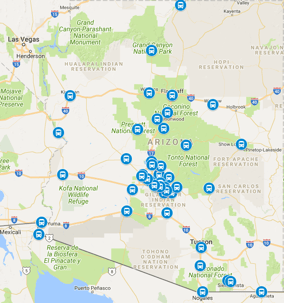
Airport Shuttle of Phoenix operates on a simple promise — airport shuttle service to any address or door in the state, on your schedule, 24/7 (airportshuttleofphoenix.com). That statewide coverage is what makes midday so complex. A single afternoon can involve a pickup at Sky Harbor, a run up I-17 toward Flagstaff-bound travelers, and a door-to-door drop in Tempe near Arizona State University — all while managing vehicle availability and driver hours. Midday is also when the business side happens: vehicle maintenance checks, route planning for evening events, and reviewing customer requests that came in overnight.
Why Customer Feedback Drives Decisions
In a service business, feedback isn't a nice-to-have — it's the steering wheel. The most effective shuttle operators treat every review, complaint, and comment as operational data. Did a passenger feel the pickup window was too wide? That's a dispatch adjustment. Did a driver's route choice hit unexpected congestion on the SR 143 (Hohokam Expressway)? That's a routing lesson worth sharing with the whole team. Companies that close this feedback loop quickly build the kind of reputation that word-of-mouth marketing can't buy — and in local airport transportation, word of mouth and repeat bookings are the lifeblood of the business.
Evening Operations: Wrapping Up the Day
Evenings in the Phoenix metro bring a second rush — and a second set of challenges. Entertainment and event traffic shapes the roads: a Coyotes or Suns game downtown, a concert at the Footprint Center, or an event at State Farm Stadium in Glendale can transform I-10 and Loop 101 into parking lots. Knowing when to reroute around an event, when to build extra buffer into a pickup window, and when to simply wait out a surge is hyper-local knowledge that no app can fully replicate.
Evening wrap-up is where leadership really shows. The best operators review the day's completed trips, log any issues, and set up tomorrow's board before calling it a night. Because airport travel never stops, many shuttle companies — including Airport Shuttle of Phoenix — operate 24/7, which means someone is always on call, always watching, always ready for the 2 a.m. red-eye pickup.
Navigating the Valley: The Roads That Shape the Business
Every shuttle operation is defined by its highways, and Phoenix is no exception. Understanding the Valley's road network is core competency number one for any dispatcher or driver:
- Sky Harbor Boulevard and the SR 143 (Hohokam Expressway): The final approaches into and out of Sky Harbor's terminals, where timing is everything and a single slowdown cascades through the pickup schedule.
- I-10: The east–west spine connecting downtown Phoenix to Tempe, Chandler, and Tucson-bound travelers — often congested during morning and evening rush hours.
- Loop 101 and Loop 202: The loops that shuttle drivers lean on when crossing the metro, connecting Scottsdale, Mesa, Glendale, and the West Valley suburbs.
- I-17: The north–south route toward Anthem, Camp Verde, and ultimately Flagstaff — critical for the statewide, any-address-in-Arizona service model.
- US 60 (Superstition Freeway): The key corridor for travelers from Mesa, Apache Junction, and the East Valley heading to PHX.
It's the same dynamic operators face elsewhere in the country. Texas Shuttle describes how SH 114 and SH 183 funnel Dallas traffic to DFW, how the I-635 (LBJ Freeway) loop is notorious for construction slowdowns, and how knowing when to route a vehicle down SH 121 versus the President George Bush Turnpike — or when a Cowboys game or State Fair of Texas weekend will clog I-30 — separates a reliable operation from an average one (texasshuttle.com). Phoenix has its own equivalents: a Suns playoff game downtown, spring training traffic in the West Valley, or a monsoon storm cell over the I-10 broadway curve all demand the same kind of instinctive, experience-driven rerouting.
How Does Leadership Handle Weather and Traffic Disruptions?
Phoenix weather disruptions look different from those in other markets — haboobs and monsoon microbursts rather than snow — but the playbook is the same everywhere: monitor conditions continuously, communicate proactively with passengers before they have to ask, build realistic buffers into schedule promises, and empower drivers to make safe on-the-ground decisions. Companies like Texas Shuttle emphasize that calm under pressure is a daily requirement, not a rare event, and the same is true in Arizona. A dust storm on I-10 between Phoenix and Tucson can add hours to a statewide run; the difference between a frustrated customer and a loyal one is almost always the quality and speed of communication during the delay.
The Leadership Philosophy: Service First, Always
Strip away the logistics and the technology, and running a premium shuttle company comes down to a philosophy: service first, always. That means treating a solo business traveler with the same care as a family of six with ski gear, answering the phone with a human voice, and honoring the schedule even when it's inconvenient. It also means investing in drivers, vehicles, and dispatch systems rather than cutting corners — because in transportation, reliability compounds. Every on-time pickup earns trust; every missed one erodes it.
How important are drivers to the company's success? Enormously. Drivers are the face of the company, the ones handling the actual moment of truth. Great operators recruit carefully, train continuously, and give drivers the local knowledge and authority they need to do the job right. And does the CEO stay involved in day-to-day operations? In companies that win on reliability, the answer is yes — leaders who ride the routes, listen to dispatch, and see the operation firsthand make better decisions than those who manage purely from spreadsheets.
Why Travelers Choose a Shuttle: A Quick Comparison
For travelers weighing options out of Phoenix Sky Harbor, here's how the main ground transportation choices stack up side by side:
| Option | Best For | Schedule Control | Luggage Handling | Statewide Reach |
|---|---|---|---|---|
| Premium shuttle (Airport Shuttle of Phoenix) | Door-to-door reliability, families, groups, statewide trips | On your schedule, 24/7 | Driver-assisted | Any address or door in Arizona |
| Rideshare | Solo travelers, short-notice trips | On demand, surge-dependent | Self-load | Varies by driver availability |
| Taxi | Immediate curb pickup | On demand, metered | Driver-assisted | Primarily metro |
| Rental car | Multi-stop itineraries, long stays | Full control | Self-load | Anywhere you drive |
| Public transit / Valley Metro | Budget-conscious solo travelers | Fixed schedules | Self-managed | Metro routes only |
Note: specific costs vary by distance, vehicle type, and time of day — contact the provider directly for current rates; figures shown here are structural comparisons, not prices.
AZ Shuttle Location, Phone, and Hours
For travelers who want to talk to a human being rather than an app, Airport Shuttle of Phoenix makes that easy. The company operates from its Phoenix-area base at 4600 E Washington St, Ste 300, Phoenix, AZ 85034, just minutes from Sky Harbor's terminals. Service runs 24/7 for airport shuttle bookings to any address or door in the state, on your schedule. Call (480) 710-3441 to arrange pickup — no automated-only booking portals, no guessing. This emphasis on live, human customer service mirrors what other regional operators like Texas Shuttle (reachable at (817) 403-6196 during business hours from their Irving, TX location at 320 Decker Drive) have found works best in this industry: when travel plans are on the line, people want to talk to a person.
Phoenix Shuttle from PHX Sky Harbor: What to Expect
Travelers arriving at PHX Sky Harbor can expect a straightforward experience with a pre-booked shuttle: clear pickup instructions tied to the arrivals level and terminal of choice, a driver who tracks the actual flight, and a vehicle staged and ready when the passenger is. Because the service covers any door in Arizona, destinations range from a five-minute hop to a downtown Phoenix hotel to multi-hour runs along I-17 to Flagstaff or US 60 to the Superstition foothills. For more on navigating pickups smoothly, see the company's Phoenix airport pickup guide, and for a deeper comparison with app-based rides, check the breakdown of airport transportation challenges between shuttles and rideshare.
Frequently Asked Questions
What does a typical day look like for the leader of an airport shuttle company?
It starts before sunrise with dispatch reviews and flight-schedule checks, moves through midday coordination of arrivals and pickups, includes ongoing route adjustments for traffic and events, and ends with an evening wrap-up that sets up the next day's board. Because airport travel runs 24/7, leadership involvement often extends around the clock.
How does leadership handle weather and traffic disruptions?
Through constant monitoring, proactive passenger communication, realistic schedule buffers, and driver empowerment. In Phoenix, that means watching for monsoon storms and haboobs the way Dallas operators watch for ice and construction on I-35 — treating disruption as a daily reality rather than an emergency, as Texas Shuttle's behind-the-scenes coverage puts it.
How important are drivers to a shuttle company's success?
Critically important. Drivers are the face of the company and handle the moment of truth with every passenger. The best operators invest in training, local route knowledge, and fair treatment of drivers as the foundation of reliability.
Does the CEO stay involved in day-to-day operations?
In companies that win on reliability, yes. Hands-on leaders who ride routes, listen to dispatch, and observe operations firsthand make faster, better-informed decisions than those managing only from reports.
Which areas does Airport Shuttle of Phoenix serve?
The company provides door-to-door airport shuttle service to any address or door in the state of Arizona, on the customer's schedule, 24/7 — from Sky Harbor pickups across the Phoenix metro to statewide destinations like Flagstaff, Tucson, and Sedona.
How do I book or get a quote?
Call (480) 710-3441 to speak with a human and arrange service to or from any address in Arizona, or visit airportshuttleofphoenix.com to check rates and request pickup online. Specific pricing depends on distance and service type, so direct contact is the best way to get an accurate estimate.
What makes running a shuttle service in Phoenix different from other cities?
Scale and geography. The Phoenix metro sprawls across multiple freeway loops (Loop 101, Loop 202, I-10, I-17), and a statewide service model adds long-haul routes to Flagstaff and Tucson that most metro-only markets don't require. Add event-driven traffic and a distinctive monsoon season, and you get an operating environment that rewards deep local road knowledge above all else.