Welcome to Arizona, a land of mesmerizing beauty and enchanting landscapes. With Arizona Shuttle as your trusted travel companion, you can embark on a memorable journey through this great state's breathtaking deserts and majestic mountains. Our reliable shuttle service ensures convenient transportation, allowing you to immerse yourself in Arizona's natural wonders. Join us as we unveil the desert dreams that await you.
.jpg?width=563&height=300&name=images%20(65).jpg)
The Grandeur of the Grand Canyon
The magnificence of the Grand Canyon stands as a testament to the awe-inspiring forces of nature. Carved by the mighty Colorado River over millions of years, this awe-inspiring landmark spans 277 miles and showcases layers of deep rock formations. Stand in awe at the canyon's rim and witness the breathtaking vistas that stretch as far as the eye can see. Capture unforgettable moments as the sun's golden rays illuminate the canyon walls, creating a kaleidoscope of colors.
Sedona's Red Rock Wonderland
Sedona, a haven of deep red rock formations, beckons with its captivating beauty and spiritual energy. Phoenix to Sedona shuttle Explore the scenic trails that wind through Sedona's enchanting landscapes, offering panoramic views of Cathedral Rock, Bell Rock, and the iconic Chapel of the Holy Cross. Immerse yourself in the artistic atmosphere of Tlaquepaque Arts and Crafts Village, where you can discover unique artwork and local craftsmanship.
Monument Valley: Where Nature and Culture Collide
Venture into the heart of the Navajo Nation and discover the breathtaking vistas of Monument Valley. Phoenix to Page travel guide Marvel at the towering sandstone buttes and mesas that have been the backdrop for countless Western films. Stand in awe at iconic landmarks such as the Mittens and Totem Pole, feeling the connection between nature and humanity. Join a guided tour led by Navajo guides and gain insights into this sacred land's rich history and culture.
Sonoran Desert: A Tapestry of Life
Explore the remarkable biodiversity of the Sonoran Desert, where life thrives in seemingly inhospitable conditions. Phoenix to Tucson distance guide Discover the towering saguaro cacti, iconic symbols of the American West, as you hike through Saguaro National Park. Immerse yourself in the vibrant hues and captivating aromas of the desert flora at Phoenix's Desert Botanical Garden. Watch for unique wildlife, including roadrunners, javelinas, and Gila monsters, as they adapt to survive in this arid environment.
Arizona's enchanting landscapes offer a gateway to natural wonders and unforgettable experiences. Arizona offers a rich tapestry of landscapes from the Grand Canyon's grandeur to Sedona's vibrant beauty, Monument Valley's cultural significance, and the Sonoran Desert's biodiversity. With Arizona Shuttle as your reliable travel partner, you can seamlessly navigate this captivating state, immersing yourself in its desert dreams. Book your journey with Arizona Shuttle today and embark on an adventure of a lifetime.
Updated for the Current Travel Season | Originally Posted June 7, 2023
The Grand Canyon, Sedona, and Monument Valley deserve every ounce of their fame — but Arizona's enchanting landscapes go far deeper than the postcard icons. From hidden water-filled coves ringed by granite to the world's largest natural travertine bridge, this guide unveils the lesser-known spots, practical routing from Phoenix Sky Harbor, and answers to the questions travelers actually ask before they leave. Check this page before you go, and book your ground transportation with Arizona Shuttle so the driving never gets between you and the views.
Beyond the Icons: Hidden Places Worth the Detour
Ask any local writer and they'll tell you the same thing: Arizona is full of fantasy-novel magic that most visitors drive right past. These five spots deliver jaw-dropping beauty without the biggest crowds.
Boyce Thompson Arboretum, Superior
Located at 37615 E Arboretum Way in Superior, AZ, this state's oldest and largest botanical garden sits in the shadow of Picketpost Mountain along U.S. Highway 60. Winding trails carry you past Queen Creek, through a eucalyptus forest, and into desert alcoves where rocks, water, and shade combine into an oasis feel. It's one of the easiest half-day escapes from the Phoenix area.
Watson Lake, Prescott
At 3101 Watson Lake Park Rd, Prescott, AZ 86301, Watson Lake is a startling splash of blue water surrounded by the otherworldly granite formations known as the Granite Dells. Kayakers weave between boulder islands while hikers circle the shoreline on the Peavine and Connector trails. It's proof that Arizona's enchanting landscapes aren't only deserts.
Tonto Natural Bridge, Payson
North of Payson off State Route 87, this massive natural travertine bridge is believed to be the largest of its kind in the world, stretching 183 feet high and 150 feet wide. The hike down is moderate, with about 240 steps, but every turn reveals another window into the past — and you can walk beneath the bridge itself and stand in the spray of the waterfall.
Canyon de Chelly, Navajo Nation
Near Chinle in northeastern Arizona, Canyon de Chelly remains inhabited land with ancient Puebloan cliff dwellings clinging to the canyon sides — some dating back nearly 5,000 years. The most famous is the White House Ruin, reachable via a 2.5-mile round-trip trail that descends into the canyon. And then there's Spider Rock: an 800-foot sandstone spire rising from the canyon floor, one of the most striking natural features anywhere and a place of deep spiritual meaning in Navajo tradition. Rims drives are open to all; the canyon floor requires an authorized Navajo guide.
Mount Lemmon via the Catalina Highway, Tucson
The Catalina Highway winds through Sabino Canyon recreation country, climbing nearly 6,000 feet in elevation and passing through five distinct climate zones — it's like traveling from Mexico to Canada in less than an hour. The drive continues to the summit town of Summerhaven on Mount Lemmon, where temperatures can run 20–30 degrees cooler than Tucson below. It's the perfect escape on a scorching summer day, and it pairs naturally with our Phoenix to Tucson route.
Arizona's Enchanting Landscapes at a Glance
| Landscape | Area / Access | Signature Feature | Good to Know |
|---|---|---|---|
| Grand Canyon | Northern AZ, via AZ-64/US-180 | 277 miles carved by the Colorado River | South Rim open year-round |
| Sedona Red Rocks | Via I-17 N from Phoenix | Cathedral Rock, Bell Rock, Chapel of the Holy Cross | Shuttle service available from PHX |
| Monument Valley | Navajo Nation, UT/AZ border | The Mittens; formations over 1,000 feet high | 17-mile Valley Drive loop |
| Canyon de Chelly | Chinle, via US-191 | Spider Rock, White House Ruin | Canyon floor requires a guide |
| Tonto Natural Bridge | Payson, via SR-87 | World's largest travertine bridge (183 ft high) | About 240 steps on the trail |
| Mount Lemmon | Tucson, via Catalina Highway | Five climate zones in one climb | 20–30°F cooler at the top |
| Watson Lake | Prescott, via SR-89 | Granite Dells surrounding blue water | Kayaking and shoreline trails |
Saguaros: The Silent Sentinels of the Sonoran
Nothing says "you're in Arizona" like a saguaro cactus silhouetted against a sunset. These iconic cacti can grow over 40 feet tall and live for more than 150 years, standing like silent sentinels across the Sonoran Desert. Here's the detail that stuns first-time visitors: they don't even start growing arms until they're about 75 years old, so every saguaro you photograph is a true survivor. See them up close in Saguaro National Park outside Tucson or at the Desert Botanical Garden in Phoenix.
Monument Valley on Your Own Terms
The towering formations here, some reaching over 1,000 feet high, stand like ancient skyscrapers built by nature. You can drive the 17-mile Valley Drive loop yourself — a graded dirt road passable in most vehicles at low speed — but joining a Navajo-guided tour offers deeper insight into the cultural and spiritual significance of the land, and access to areas closed to self-drive visitors.
If you crave true solitude, know that Arizona also holds one of the country's most coveted hikes, where access is extremely limited — only 20 people per day are allowed via a lottery permit system. Apply well ahead of any trip to the Kanab/Coconino County border area, and always have a backup destination.
Sleep Inside the Storybook: The Shady Dell, Bisbee
For a stay as memorable as the scenery, head to Bisbee in the state's southeastern corner, where guests at the Shady Dell spend the night in beautifully restored vintage trailers — each one a polished aluminum classic from the mid-20th century that's been brought back to life with care and real attention to detail. Pair it with a stroll through Bisbee's historic mining-era streets, or detour north to Valle, where Raptor Ranch gives travelers on the way to the Grand Canyon an up-close look at birds of prey.
Back in Phoenix, don't skip Mystery Castle in South Mountain Park — built by Boyce Luther Gulley from found materials, rocks, and recycled objects, it's one of the strangest and most beloved hidden places in the city.
Getting There: Phoenix Shuttle from PHX Sky Harbor in Arizona
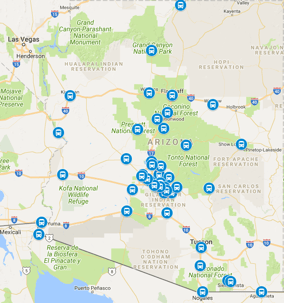
Arizona's enchanting landscapes are spread across hundreds of highway miles, which is exactly why Airport Shuttle of Phoenix exists. We provide airport shuttle service from PHX Sky Harbor to any address or door in the state, on your schedule, 24/7 — whether that's a hotel lined with palm trees in downtown Phoenix, a trailhead shuttle, or a long-haul ride to Sedona, Flagstaff, Page, or Tucson.
AZ Shuttle Location, Phone, and Hours
- Office: 4600 E Washington St, Ste 300, Phoenix, AZ 85034 US
- Phone: (480) 710-3441 — talk to a human, 7 am–5 pm MST
- Service window: Reservations and pickups available 24/7
- Coverage: Any address or door in the state, on your schedule
Traveling in September or another shoulder-season month? That's often the sweet spot — warm desert days, cooler high-country air, and thinner crowds at the biggest overlooks. Check road conditions, leave early for popular spots, and let a professional driver handle the winding mountain highways. See our guides for the Phoenix Airport to Sedona shuttle, the Phoenix to Page travel guide, and Phoenix to Goodyear shuttle service for route specifics.
Frequently Asked Questions About Arizona's Enchanting Landscapes
What is the most enchanting landscape in Arizona?
The Grand Canyon is the undisputed headliner — a 277-mile chasm carved by the Colorado River over millions of years — but regulars often argue Sedona's red rocks at sunset or Spider Rock at Canyon de Chelly are just as spellbinding, with a fraction of the foot traffic.
How do I get from Phoenix Sky Harbor Airport to Sedona without driving?
Book a shuttle. Airport Shuttle of Phoenix runs door-to-door service from PHX Sky Harbor to Sedona and destinations statewide, 24/7. Call (480) 710-3441 between 7 am and 5 pm MST to speak with a real person about your schedule.
Can you visit Monument Valley without a tour?
Yes. You can drive the 17-mile Valley Drive loop yourself. However, a Navajo-guided tour is the only way to enter restricted backcountry areas and to understand the cultural and spiritual significance of the formations.
When is the best time of year to explore Arizona's landscapes?
Spring and fall offer the most comfortable temperatures statewide; September is a local favorite as summer heat breaks but high-country colors linger. On Mount Lemmon, expect 20–30 degrees cooler conditions than Tucson any month of the year.
Where can I see the giant saguaro cactus?
The Sonoran Desert is the only place on Earth where saguaros grow, with the densest easy-access viewing at Saguaro National Park near Tucson and the Desert Botanical Garden in Phoenix. Look for the armless "youngsters" — any saguaro with arms is at least 75 years old.
What is the travertine bridge near Payson?
Tonto Natural Bridge, believed to be the largest natural travertine bridge in the world at 183 feet high and 150 feet wide,