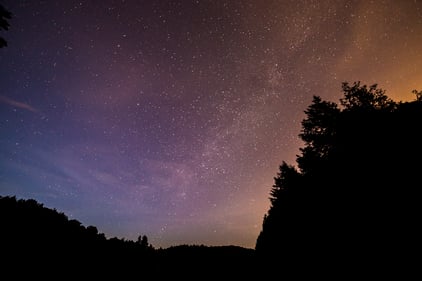
Prescott, Arizona, is an excellent destination for stargazing, offering a transparent, open sky with little light pollution. Unsurprisingly, the city is home to one of the largest astronomy clubs in the country. If you love the starry sky and want to explore it further, a stargazing adventure in Prescott is just the thing for you. At about 5,300 feet of elevation, the air is thin and clear, so the stars burn bright. Our Phoenix to Prescott shuttle runs 24/7 door to door from Phoenix Sky Harbor, and the Phoenix to Prescott travel guide covers the route in detail - so you can experience the beauty of the night sky without worrying about transportation.
Here's a guide to stargazing in Prescott:
Plan your trip
The first step in your stargazing adventure is to plan your trip. Check the weather forecast to make sure it will be clear and cloud-free. Please choose a location away from city lights where the sky is dark and where it's safe and legal to park your vehicle. Prescott's best stargazing spots include Lynx Lake, Thumb Butte, and Granite Basin. best stargazing spots near Prescott
Know the best time to go.
The best time to stargaze is during a new moon or a thin crescent moon. The moon can be a significant source of light pollution, so it will be harder to see stars and other celestial objects if you go through a full moon. Also, the best time to go stargazing is after midnight, when the sky is the darkest.
Bring the right gear.
You must bring the right gear to maximize your stargazing adventure. A telescope or binoculars will help you see the stars and planets clearly. A star chart or a smartphone app can help you identify the constellations and other celestial objects in the sky. Warm clothing, a blanket, and a chair or a mat to lie down on are also essential for a comfortable stargazing experience.
Learn about the constellations.
One of the most enjoyable parts of stargazing is identifying the constellations. Orion, Ursa Major, and Cassiopeia are just a few of the constellations you can see in the Prescott night sky. With the help of a star chart or a smartphone app, you can learn to recognize the most common constellations and even some of the less well-known ones.
Take a guided tour
If you're new to stargazing or want to learn more about the night sky, consider taking a guided tour. The Prescott astronomy community hosts public viewing nights, and local outfitters sometimes run guided excursions. For getting there, Airport Shuttle of Phoenix provides 24/7 door-to-door transportation from Phoenix Sky Harbor to Prescott, dropping you close to the best dark-sky spots.
Stargazing in Prescott is a unique experience you won't want to miss. With the help of Arizona Shuttle, you can enjoy a comfortable and safe ride to some of the best stargazing spots in the city. Pack your bags and hop in for an unforgettable night under the stars.

Frequently Asked Questions
What are the best times to go stargazing in Prescott?
The best time is during a new moon or thin crescent moon, and after midnight when it's darkest.
Which locations in Prescott offer the best views for stargazing?
Lynx Lake, Thumb Butte, and Granite Basin are great spots with minimal light pollution.
What gear should I bring for a comfortable stargazing experience?
Bring a telescope or binoculars, star chart or app, warm clothing, blanket, and something to sit or lie on.
Can you recommend any guided tours for beginners in Prescott?
Airport Shuttle of Phoenix does not run guided astronomy tours, but our 24/7 door-to-door service between Phoenix Sky Harbor and Prescott gets you to Lynx Lake, Thumb Butte, or Granite Basin rested and on your own schedule. The Prescott astronomy community also hosts public viewing nights if you want expert guidance. Planning a different route? See our Prescott to Phoenix shuttle page for flat-rate pricing and online booking.
Why Prescott's Night Skies Are So Dark
Prescott's stargazing reputation isn't an accident. The city sits at roughly a mile high in the mountains of central Arizona, surrounded by the pine-covered terrain of the Prescott National Forest, which buffers it from the light domes of Phoenix and other large cities. Prescott has also taken deliberate steps to protect its night sky — the city has been recognized by DarkSky International (formerly the International Dark-Sky Association) as an International Dark Sky Community, thanks to lighting ordinances designed to keep outdoor lights aimed down and shielded. For visitors, that means noticeably darker horizons and more visible stars than you'll find anywhere near the Valley of the Sun.
The elevation matters, too. Thinner air at 5,000+ feet holds less moisture and haze, which makes stars appear steadier and sharper. Combine that with Arizona's famously dry climate and you get some of the most reliable viewing conditions in the country — especially on cool, clear nights between late fall and early spring.
Best Stargazing Spots in Prescott, Compared
All of the locations below sit on or near public land, so check posted hours and any day-use rules before you head out. Nighttime temperatures drop fast in every season, so dress far warmer than a daytime visit would suggest.
| Location | How to Get There | Best For |
|---|---|---|
| Lynx Lake Recreation Area | Take SR 69 east from downtown Prescott, then follow Walker Road toward the lake | Open views near the water; popular, well-visited area with parking at the recreation sites |
| Thumb Butte | Follow Groom Creek Road off White Spar Road (US 89/SR 89 corridor) southwest of downtown | Quick access from town with a dramatic butte silhouette on the horizon |
| Granite Basin Recreation Area | Head west from downtown via Iron Springs Road | Granite formations, open sky, and a genuine backcountry feel just minutes from town |
| Watson Lake | Take SR 89 north from downtown Prescott | Iconic granite dells reflections and easy parking near the lake's shoreline areas |
| Goldwater Lake | Follow the Senator Highway (South Mount Vernon Street) south from the Courthouse Plaza area | A quieter, forested setting favored by locals for evening sky watching |
A few practical notes: cell service can be spotty at Lynx Lake and in Granite Basin, so download offline maps before you leave town. Watch for wildlife on the drive — deer and javelina are active after dark on the highways leading out of Prescott, particularly on the winding stretches of the Senator Highway and Iron Springs Road.
What You Can See in the Prescott Sky
On a clear, moonless night in Prescott, the Milky Way is visible to the naked eye, arcing overhead during the summer months when its bright galactic core rises in the southern sky. You don't need a telescope to enjoy it — a simple pair of binoculars reveals star clusters, nebulosity, and the faint band of our own galaxy.
- Planets: Bright Venus, Mars, Jupiter, and Saturn regularly put on shows visible from any dark corner of town. Free apps like Stellarium or SkySafari will show you exactly what's up on the night you visit.
- Constellations: Orion dominates winter evenings, while summer brings Scorpius and Sagittarius low in the southern sky — pointing the way to the Milky Way's core.
- Meteor showers: The Perseids in mid-August and the Geminids in mid-December are among the most reliable annual events. Note that August viewing can be weather-dependent due to Arizona's monsoon season, when afternoon storms and cloud cover are common.
- The moon: Don't write off bright moon phases entirely — a first-quarter moon viewed through binoculars from Watson Lake's granite dells is spectacular in its own right.
Stargazing in Prescott by Season
Winter (December–February)
Crisp, dry air makes winter nights exceptionally transparent, but they are cold — often below freezing. Bundle up in serious layers and bring a thermos. Orion, the Pleiades, and bright Jupiter (in recent years) reward the effort.
Spring (March–May)
Arguably the sweet spot: milder temperatures, generally stable weather, and the Milky Way beginning to return in the pre-dawn hours before shifting to prime evening viewing by early summer.
Summer (June–August)
The Milky Way's core shines highest in the sky, making this peak season for astrophotography. The trade-off is monsoon season, typically running from late June through September, when thunderstorms build in the afternoons and evenings. Watch the forecast and have a backup date.
Fall (September–November)
Clearing skies after the monsoon, comfortable temperatures, and early sunsets that let you start viewing at a family-friendly hour. An excellent season for first-time stargazers.
Dark-Sky Etiquette and Safety
- Dim your lights. Once parked, switch off headlights and use red-light mode on headlamps and phones. White light ruins dark adaptation for everyone nearby and takes 20–30 minutes to recover from.
- Pack out everything. These sites are on or adjacent to Prescott National Forest land — leave them exactly as you found them.
- Tell someone your plans if you're heading to a remote spot like Granite Basin, and keep your vehicle on designated roads.
- Stay warm. Desert-mountain temperature swings are dramatic; even summer nights can feel cold after midnight.
Pairing Your Stargazing Trip with a Prescott Visit
Make a full evening of it: browse the galleries around Courthouse Plaza, grab dinner in Whiskey Row's historic district, then drive fifteen to twenty minutes to any of the dark-sky spots above. If you're flying in, Phoenix Sky Harbor is the closest major airport, and the drive up I-17 and SR 69 takes you through some beautiful high-desert country — which is exactly why our Phoenix to Prescott shuttle runs around the clock, including late-night pickups for evening arrivals.
More Frequently Asked Questions About Stargazing in Prescott
Can you see the Milky Way from Prescott?
Yes. On clear, moonless nights — especially from late spring through early fall — the Milky Way is clearly visible to the naked eye from Prescott's darker outskirts like Granite Basin and Lynx Lake.
Is Prescott a Dark Sky Community?
Yes. Prescott has been designated an International Dark Sky Community by DarkSky International, reflecting city lighting rules that limit light pollution and protect the night sky.
Is it safe to go stargazing alone at night in Prescott?
Generally yes at popular, well-visited spots like Watson Lake and Lynx Lake, but use common sense: tell someone where you're going, watch your footing on granite terrain, and be aware of wildlife after dark.
Do I need a telescope to enjoy stargazing in Prescott?
No. Prescott's skies are dark enough that the Milky Way, constellations, and bright planets are all visible without any equipment. Binoculars are a great low-cost upgrade, and a telescope can come later if you get hooked.
Does the monsoon season affect stargazing in Prescott?
Yes. Arizona's monsoon, typically late June through September, brings afternoon and evening thunderstorms that can cloud the sky. Build flexibility into your plans and check the forecast the day of your outing.
What's the closest airport for a stargazing trip to Prescott?
Phoenix Sky Harbor International Airport. From there, it's a scenic drive north to Prescott — and Airport Shuttle of Phoenix offers 24/7 door-to-door shuttle service between Sky Harbor and Prescott, so late-night arrivals aren't a problem.