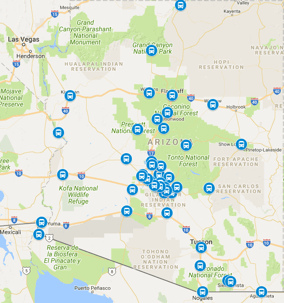
Sunrise at the Grand Canyon turns a silent canyon into a theater of light, with rock layers igniting from purple to gold while the Colorado River glints a mile below. Visitors flying into Phoenix Sky Harbor can stand at the South Rim for dawn after a single evening drive north, making sunrise the crown jewel of a canyon trip. Day tours, overnight rim stays, and viewpoint-hopping all orbit that first light. Begin with the Sky Harbor airport shuttle so the journey starts smoothly long before the alarm rings.
Flying into Phoenix for a sunrise tour
Sky Harbor sits roughly three and a half hours from the South Rim via the interstate north through Flagstaff, a drive best done the afternoon before sunrise rather than overnight. Travelers who arrive in Phoenix by midafternoon can reach rim lodges or gateway towns by evening, sleep real hours, and wake fresh for a 4 a.m. alarm. Red-eye arrivals should claim a hotel nap before driving, because canyon roads and dawn viewpoints demand alert travelers. Groups should commit to the overnight plan together, since split decisions strand half the party.
Spring and fall bring the finest sunrise conditions, with clear skies, comfortable rim temperatures, and golden light raking across the temples. Summer brings monsoon drama, when storm clouds can either paint the sky or hide the sun entirely. Winter brings crystalline air and snow-dusted rims, with the coldest waits and the most spectacular clarity. A pre-booked Phoenix airport shuttle keeps arrival day calm so dawn energy stays saved for the canyon.
Rim lodging inside the park books out months ahead for peak seasons, with gateway towns offering backup beds at varying distances. Travelers who miss park lodges should compare drive times honestly, since a far-flung motel can add an hour to an already brutal wake-up. Confirm sunrise time for the exact date, because first light shifts by minutes daily. Visitors extending through red-rock country often browse the Sedona airport shuttle for multi-day itineraries.
Best sunrise viewpoints
Mather Point delivers the classic first-timer sunrise, with expansive eastern views, nearby parking, and room for crowds that gather in the blue hour. Yaki Point offers a quieter alternative reached by shuttle bus, with unobstructed sightlines down the canyon axis. Hopi Point faces the sunset crowds but frames dawn beautifully across the western temples. Desert View Watchtower pairs sunrise with architecture, its stone tower silhouetted against the waking sky.
Arrive forty-five minutes before published sunrise to claim a rail spot, set up cameras, and watch the pre-dawn glow build. Dress far warmer than the forecast suggests, since rim winds at dawn bite through light jackets in every season. Tripods cluster at the best angles early, so stake a position and stay put rather than wandering. The ten minutes after the sun crests outperform the sunrise moment itself, as light floods downward through the layers.
Planning the sunrise day
The smoothest sunrise days run on a ruthless timeline: alarm, warm layers, thermos, viewpoint by blue hour, then breakfast after the light show. Pack headlamps for the dark walk to the rim, gloves for winter waits, and a thermos that earns its weight in gold. Eat a real breakfast after dawn, since the early start and thin air drain energy fast. Midday naps back at the lodge rescue the afternoon for rim walks and museum stops.
Daytime hours invite the Rim Trail, a mostly flat paved path linking viewpoints with constant canyon company. Shuttle buses loop the Hermit Road viewpoints, letting travelers hop between overlooks without moving the car. The geology museum, Kolb Studio, and Bright Angel history add human chapters to the rock story. Evening plans might include a second sunset viewpoint, because one canyon light show deserves another.
What to know before you go
Park entry requires a vehicle pass, with lines at the south gate peaking midmorning, so dawn arrivals actually dodge the worst waits. Rim services cluster at the village, with water stations, dining, and shuttle stops within walking distance. Summer thunderstorms build by afternoon, so schedule exposed viewpoints for morning hours. Winter ice slicks the rim paths, making traction devices wise for sunrise walks.
Altitude near seven thousand feet affects flatland visitors, so hydrate, pace exertion, and go easy on evening drinks the night before. Below-the-rim hiking demands far more preparation than rim viewpoints, with no water on most trails and heat that intensifies with every step down. Day hikers should set strict turnaround times and carry more water than seems necessary. The canyon rewards humility and punishes ambition.
Heading home after sunrise
Departure days after a sunrise trip stay smooth when travelers drive back to the Valley the evening before flying. Confirm the return airport ride the night before, with pickup timed for terminal traffic at Sky Harbor. Keep cameras and tripods packed where canyon dust cannot smudge the glass. Photograph passes and confirmations before tucking them away.
Travelers who arrange the return through the same Phoenix airport shuttle they arrived with end the journey unhurried. The sunrise photos will anchor every album, but the smooth airport bookends are what made the 4 a.m. alarm feel worth it.
Frequently asked questions
How far is the Grand Canyon from Phoenix airport?
About three and a half hours by road from Sky Harbor to the South Rim. Drive up the afternoon before sunrise rather than overnight.
What time should I arrive for sunrise?
Forty-five minutes before published sunrise. Early arrival claims a rail spot and catches the pre-dawn glow that precedes the main show.
Where is the best sunrise viewpoint?
Mather Point for first-timers, Yaki Point for smaller crowds, Desert View for architecture plus dawn. Each frames the eastern light differently.
What should I bring for sunrise?
Warm layers, a headlamp, gloves in cold months, a thermos, and a tripod for photos. Rim winds at dawn bite in every season.
Getting from Phoenix or Scottsdale to the Grand Canyon
The South Rim of Grand Canyon National Park is approximately 230 miles north of Phoenix, and normal driving time is commonly around 3.5 to 4 hours each way before hotel pickups, meal stops, traffic, weather, park entrance lines or sightseeing along the route. A common route follows Interstate 17 north toward Flagstaff, Interstate 40 west toward Williams and Arizona Highway 64 north to the park's South Entrance. Scottsdale pickups generally follow the same Interstate 17 corridor, so allow extra time for resort pickups and morning traffic.
For sunrise, do that drive the afternoon before. Interstate 17 climbs from the Valley past Sunset Point and Cordes Junction, through Tonto National Forest foothills and Verde Valley turnoffs for Sedona and Jerome, then into Flagstaff beneath the San Francisco Peaks mountain skyline. From Williams, Arizona Highway 64 leads through Kaibab National Forest to Tusayan and the South Entrance. Confirm your specific pickup location, navigation instructions and reservation details in advance, and use a pre-booked Phoenix airport shuttle service so arrival-day driving does not steal sleep before a dawn alarm.
Favorite Grand Canyon Area Tours from Phoenix/Scottsdale
One tour may devote most of the day to the Grand Canyon, while another may divide its time among Sedona, Route 66 and the South Rim. Visit the Grand Canyon and explore Route 66 with an expert guide who handles all the driving and logistics, leaving you free to soak in the incredible scenery. Direct South Rim tours may provide more canyon time than itineraries combining Sedona, Route 66 or other attractions, which matters when sunrise photography is the goal.
Quick Details: How to Compare Sunrise and Day Tours
Time at the South Rim varies by itinerary, route, pickup schedule and included Sedona or Route 66 stops. Most ground tours occupy the majority of a day and may last approximately 12 hours or longer. Small-group formats are common, including itineraries with numbers limited to 13 participants for a more intimate experience, and private options with a minimum of 1 and a maximum of 5 travelers. Some itineraries also list an optional Colors & Canyons 45-minute helicopter upgrade available for an aerial perspective after rim time.
| Tour Style | Time at South Rim | Typical Length | Best For |
|---|---|---|---|
| Direct South Rim sunrise focus | Most canyon time | Approximately 12 hours or longer | Sunrise photography locations and maximum rim time |
| Grand Canyon plus Sedona Red Rocks picture stop | Less than direct; varies by route and pickups | About 13 hours from the Phoenix area | Red-rock scenery plus canyon in one long day |
| Grand Canyon plus Route 66, Flagstaff and Williams | Varies by pickup schedule and stops | Majority of a day | Historic highway towns and forest driving |
| Antelope Canyon plus Horseshoe Bend from Phoenix | East of the canyon via Flagstaff, San Francisco Peaks, Lake Powell and Navajo Trading Post | Between 12 to 14 hours, with lunch, Lower Antelope Canyon tickets and Horseshoe Bend admission included on some itineraries | Slot-canyon photography and Colorado River overlooks |
See the Best Parts of the Grand Canyon and Arizona
When you reach the Grand Canyon, itineraries often combine rim overlooks, the Rim Trail, historic village buildings and shuttle-served viewpoints. Combination tours add Arizona context: a stop for pictures of the Red Rocks of Sedona on a 13-hour tour from the Phoenix area, Route 66 storefronts in Williams and Flagstaff, and high-desert forest transitions between the Verde Valley and the South Rim. Travelers extending east can take in Route 66, Flagstaff, the San Francisco Peaks, Lake Powell, and a Navajo Trading Post on the way to Antelope Canyon, including Lower Antelope Canyon and Horseshoe Bend.
Photographers should plan locations around light direction rather than mileage. Eastern overlooks favor sunrise, western overlooks favor late day, and midday suits museums, Kolb Studio, Desert View Watchtower and national monument country around Flagstaff such as Wupatki and Sunset Crater. Bring layers, water, headlamp, traction in winter, and lens cloths for dust. Visitors pairing canyon dawn with red-rock country often check the Sedona airport shuttle and start the trip with the Sky Harbor airport shuttle.
Reservation, Location, Phone and Hours Tips
For an overnight sunrise plan, confirm the shuttle location, phone contact and hours on the provider contact page before travel day. Save the specific meeting point, terminal navigation notes and after-hours phone number offline, because early-morning pickups and rim areas can have weak reception. Make the reservation for both arrival and return airport legs, then reconfirm the night before with party size, luggage and child seats. This simple contact check keeps a 4 a.m. rim departure calm and predictable.