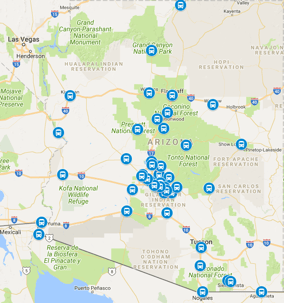
Flagstaff is a hub of tourist attractions. It is due to the grand canyon, which attracts many tourists. You can enjoy many natural wonders here, like Oak Creek Canyon. The climate here is cooler, with snowy winters.
Both places have unique attraction sites, and the way between these places has many worth a visit places. And Arizona shuttle has listed a few stops to make your journey entertaining.
Things to explore on the way to Flagstaff
Phoenix to Flagstaff shuttlecom/" style="font-size: 14px;" rel="noopener" target="_blank">Rock Springs Café
Rock Springs Café came into existence during the 1800s with the former name “The Rock.” It was a periodic encampment back in the day. It was a 19-year-old boy whose idea bears the fruits of success now. It is a café and general store known by the name rock springs. It's a famous stop for travelers and has been their favorite for over 80 years and continues. The pies here are mouth-watering, with combinations of various fruits, creams, and so on. So take a moment to enjoy the stop.
Arcosanti
Arcosanti is an experimental town that is an hour's drive from Phoenix. This laboratory was built in 1970 by Paolo Soleri, an Italian- American architect. Arcosanti visit details Arcosanti visit details The construction was based on the principles of arcology, a blend of architecture and ecology with the motive of designing sustainable cities. You will find workshops, events, and guided tours of the place.
Montezuma Castle National Monument
Montezuma Castle National Monument is the third national monument dedicated to preserving native American culture since 1906. The collection of original artifacts in this place was few due to the looting of the site multiple times. Montezuma Castle insights Montezuma Castle insights Earlier, access to the place was by climbing a series of ladders up the limestone cliff, but the access was prohibited due to extensive damage. Now you can view a glimpse through the window of the past during your visit to the castle.
Montezuma Well
Montezuma Well is said to be the detached part of the national monument. This cliff has over 30 rooms along the inner surface of the natural well. Where you get a closer look at the well when you hike down towards the well. The well is 386 feet from rim to rim, whose water is carbonated and contains high levels of arsenic. Only five fish species can survive and are exclusively found in the Montezuma well.
Arizona shuttle is your travel solution. Choose the ride which fits your needs, as we provide SUVs, shuttle service, and pre-booked luxury cars. Our rides are safe with expert drivers. You can make changes to the date and time without any charges. You can get a hustle-free experience as we are available 24/7 with pickup at any address. Book your ride, and for more information, contact (480) 710-3441.
Frequently Asked Questions
What kind of pies can I expect at Rock Springs Café?
Rock Springs Café is famous for its mouth-watering pies with various fruit and cream combinations.
How long does it take to get to Arcosanti from Phoenix?
Arcosanti is an hour's drive from Phoenix.
What can visitors see at Montezuma Castle National Monument?
Visitors can view original artifacts and a glimpse into the past through windows, as climbing access was prohibited due to damage.
Is it safe to hike down to Montezuma Well?
Yes, hiking down is safe, allowing visitors to see 30 rooms along the inner surface of this natural well.
More Things to Explore on the Way to Flagstaff
The drive from Phoenix to Flagstaff along Interstate 17 is roughly a two-hour journey in ideal conditions, but treating it as a straight shot means missing some of central Arizona's most memorable stops. If you have already planned a visit to Rock Springs Café, Arcosanti, and the Montezuma Castle area, the stops below fill out the rest of the corridor — from roadside viewpoints just off the highway to short detours that reward you with wildlife, ruins, and high-country scenery. Each entry tells you what you will find, roughly how far it sits from the interstate, and why it deserves a slot in your itinerary.
Sunset Point Rest Area
Sunset Point is one of the easiest and most scenic stops on the entire corridor, located directly on I-17 northbound between the Black Canyon City and Cordes Junction exits. Unlike most rest areas, this one is built on a high desert overlook that looks out over the Black Hills and the rugged terrain of the Agua Fria drainage. It is an ideal place to stretch your legs, take in the panorama, and snap photos without adding meaningful time to your trip. If you are traveling around late afternoon, the western light on the surrounding hills is what gives the stop its name. There are restrooms and picnic areas on site, making it a practical break point for families as well as photographers.
Agua Fria National Monument and Badger Springs Wash
Managed by the Bureau of Land Management, Agua Fria National Monument protects a high desert plateau dotted with prehistoric sites left by peoples who farmed and hunted in the region centuries ago. One of the most accessible entry points is the Badger Springs trailhead off the Badger Springs exit on I-17. An easy walk down Badger Springs Wash leads toward the Agua Fria River and passes petroglyph panels on the boulders along the way. Because it sits just off the interstate, this is one of the few places in the state where you can stand in front of ancient rock art within minutes of leaving the highway. Check conditions before you go, as the wash and river can flow after storms, and carry plenty of water.
Camp Verde: Fort Verde State Historic Park and Out of Africa Wildlife Park
Camp Verde, reachable via the SR 260 and SR 260/General Crook Trail exits from I-17, is one of the richest side trips on the route. Fort Verde State Historic Park preserves the former military post that served as a base during the Indian Wars era of the 1870s. Visitors can walk the grounds and view the surviving administrative buildings, which house exhibits on the fort's history and the soldiers and settlers who passed through it. Nearby, Out of Africa Wildlife Park sits in the hills above Camp Verde and offers safari-style tours where visitors can see lions, tigers, giraffes, and other animals in sprawling natural enclosures. Together, the two attractions make Camp Verde a worthy half-day stop, particularly for travelers with children.
Cliff Castle Casino and the Verde Valley
Operated by the Yavapai-Apache Nation, Cliff Castle Casino lies just off I-17 near the Camp Verde exits and offers gaming, dining, and live entertainment. Even if gambling is not your goal, the property's restaurants make it a convenient sit-down meal stop in an otherwise lightly developed stretch of highway. The surrounding Verde Valley is also the gateway to the Verde Canyon Railroad in nearby Clarkdale and the wine-tasting rooms that the region has become known for, though those require a longer detour along SR 260 west toward Cottonwood.
Village of Oak Creek and the Sedona Red Rocks
About 30 miles south of Flagstaff, take Exit 298 for State Route 179 north toward the Village of Oak Creek and Sedona. You do not need to commit to a full Sedona visit to justify this detour — SR 179 itself is one of the most scenic two-lane roads in Arizona, winding past Cathedral Rock, Bell Rock, and Courthouse Butte. The Village of Oak Creek offers pullouts and trailheads where you can admire the red rock formations without navigating Sedona's busier town center. If you do have extra time, the area's trail network offers everything from short interpretive walks to half-day hikes. Just remember that Sedona-area trailheads are popular, so starting early gives you the best chance at convenient parking.
Twin Arrows and the Eastern Approach to Flagstaff
North of the Sedona turnoff, I-17 climbs steadily toward the Mogollon Rim, and the landscape shifts from desert scrub to juniper and pine. The Twin Arrows area, near the Winona exit, is home to a resort and casino operated by the Navajo Nation and takes its name from the twin roadside arrows — a weathered Route 66-era curiosity that still stands as a quirky photo stop for travelers. This stretch of the drive also delivers your first clear views of the San Francisco Peaks, the dormant volcano range that towers over Flagstaff and holds deep cultural significance for the region's Native peoples.
Walnut Canyon National Monument
Once you reach Flagstaff, Walnut Canyon National Monument is a short drive east via I-40. The monument protects cliff dwellings built into the limestone walls of a deep canyon by the Sinagua people, who lived in the region well before European arrival. The Island Trail descends into the canyon and passes several restored dwellings up close, while the shorter Rim Trail offers overlooks of the canyon and additional structures visible across the walls. It pairs naturally with a Flagstaff arrival, letting you ease into the higher elevation while stepping back several hundred years in time.
Downtown Flagstaff and Lowell Observatory
Phoenix-to-Flagstaff Stops at a Glance
| Stop | What You Will Find | Access From I-17 |
|---|---|---|
| Sunset Point Rest Area | Scenic overlook, restrooms, picnic areas | Directly on I-17 northbound |
| Agua Fria National Monument | Petroglyphs, desert wash trails, river access | Badger Springs exit |
| Camp Verde | Fort Verde State Historic Park, Out of Africa Wildlife Park | SR 260 exits |
| Cliff Castle Casino | Gaming, dining, entertainment | Camp Verde exits |
| SR 179 / Village of Oak Creek | Red rock formations, trailheads, gateway to Sedona | Exit 298 |
| Walnut Canyon National Monument | Sinagua cliff dwellings, canyon trails | I-40 east of Flagstaff |
| Lowell Observatory | Historic telescopes, Pluto discovery site, evening programs | Mars Hill Road, downtown Flagstaff |
Practical Tips for the Drive
Interstate 17 climbs several thousand feet between Phoenix and Flagstaff, so expect the temperature to drop noticeably as you approach the high country — Flagstaff sits at over 7,000 feet of elevation, and its winters regularly bring snow and ice to the highway. Check road conditions through the Arizona Department of Transportation before traveling in the colder months. Fill your gas tank before the northern stretches of the corridor, as services thin out between Camp Verde and Flagstaff. Finally, remember that a few of these stops, such as the national monuments, operate on posted hours and may have seasonal access restrictions, so confirm details on the National Park Service or land-manager websites before you build your schedule.
Frequently Asked Questions
What is the best quick stop on I-17 between Phoenix and Flagstaff?
Sunset Point Rest Area is the best quick stop. It sits directly on the interstate and offers a panoramic desert overlook, restrooms, and picnic tables without adding time to your drive.
Can I see petroglyphs close to I-17?
Yes. The Badger Springs Wash trail in Agua Fria National Monument starts just off the highway and leads past petroglyph panels on boulders along the route to the Agua Fria River.
How do I reach Sedona from I-17?
Take Exit 298 onto State Route 179 north. The highway passes through the Village of Oak Creek, with views of Bell Rock, Cathedral Rock, and Courthouse Butte along the way.
Is Camp Verde worth a stop on the way to Flagstaff?
Camp Verde is one of the most rewarding stops on the route, combining the history of Fort Verde State Historic Park with the wildlife experiences at Out of Africa Wildlife Park.
Where can I see cliff dwellings near Flagstaff?
Walnut Canyon National Monument, just east of Flagstaff via I-40, protects Sinagua cliff dwellings built into limestone canyon walls, with a trail system that lets you view them up close.
What is there to do in Flagstaff when I arrive?
Downtown Flagstaff offers historic Route 66 storefronts, dining, and shopping, while Lowell Observatory above the city features historic telescopes and evening public viewing programs at the site where Pluto was discovered.
Should I worry about snow on the Phoenix-to-Flagstaff drive?
Flagstaff's high elevation means winter snow and ice are common on I-17's northern stretch. Check Arizona Department of Transportation road conditions and plan extra travel time during the colder months.